A tiny white spot near the gumline, a child who suddenly avoids cold foods, or a reluctant brush at bedtime can be easy to dismiss. Yet these small moments can be the earliest signs that a tooth needs more support. This guide to children’s cavity prevention is designed to help Melbourne parents create calm, realistic routines that protect little smiles without turning every meal or bedtime into a battle.
Cavities are common, but they are not simply a matter of a child having too many lollies or not trying hard enough. They develop when bacteria in dental plaque use sugars and starches from food and drinks to produce acids. Over time, those acids weaken the outer layer of a tooth. Prevention works best when we gently support the whole pattern: brushing, food choices, drinking habits, saliva, sleep, breathing, and regular dental care.
Why baby teeth deserve careful protection
Baby teeth may be temporary, but their role is significant. They help children chew comfortably, speak clearly, maintain space for adult teeth and develop confidence around eating and smiling. A cavity in a baby tooth can still cause pain, infection and disrupted sleep. It can also make future dental visits feel frightening if treatment becomes urgent.
The good news is that early changes to enamel can sometimes be stabilised before a hole forms. Regular checks give your dentist the chance to identify risk early, while prevention can still be gentle and straightforward. For families who prefer a lower-tox, individualised approach, this is also the time to discuss materials, preventive products and home routines that feel aligned with your values.
A guide to children’s cavity prevention starts at home
The most effective habits are usually the least dramatic. They are repeated often, feel predictable to your child, and are supported by adults for longer than many parents expect.
Brush twice daily, with a parent still involved
Brush in the morning and before bed for two minutes. Night-time brushing matters especially because saliva flow naturally drops during sleep, leaving sugars and acids on teeth for longer. After brushing, offer water only.
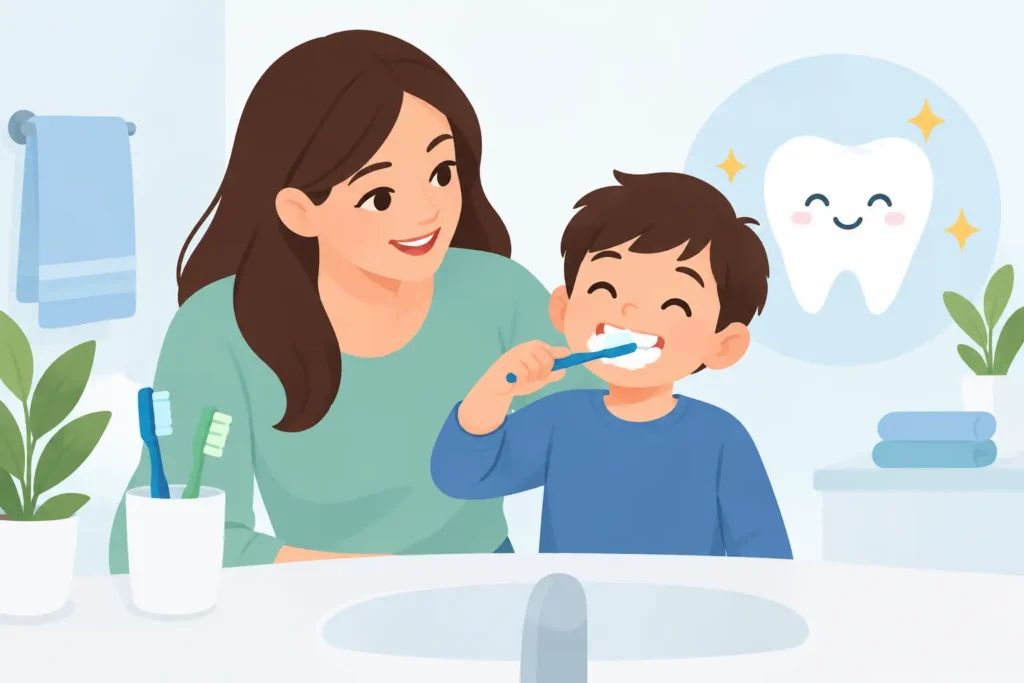
Young children do not yet have the dexterity to clean every tooth surface well. As a guide, parents should brush or closely supervise brushing until around age eight, and sometimes longer. Let your child have a turn first if it builds cooperation, then finish the job yourself with a gentle, thorough brush along the gumline, chewing surfaces and back teeth.
Use a soft, small-headed toothbrush and a small amount of toothpaste suited to your child’s age and ability to spit. Fluoride toothpaste remains a well-established option for reducing decay risk. Some families ask about hydroxyapatite toothpaste as an alternative approach to supporting enamel. The best choice depends on your child’s cavity risk, age, diet, medical history and your family’s preferences, so it is worth having a personalised conversation rather than following a one-size-fits-all rule.
Clean between teeth when they touch
If your child’s teeth sit close together, a toothbrush cannot reach the contact points between them. This is where cavities can quietly develop, particularly between the back molars. Flossing once a day is ideal once teeth touch. Floss picks can be easier for parents to use, although the key is a calm, consistent technique rather than a perfect performance.
Start with one or two teeth if your child resists. A short, positive routine built over weeks is more valuable than an ambitious routine that ends in tears.
Make water the everyday drink
Frequent sipping is often more harmful to teeth than an occasional treat. Each sip of juice, cordial, soft drink, sweetened milk, sports drink or flavoured drink can feed acid-producing bacteria. Even drinks that seem wholesome, such as smoothies and dried-fruit blends, can be high in natural sugars and cling to teeth.
Tap water is the kindest default between meals. Plain milk with meals can also fit well within a balanced diet. Save sweet drinks for occasional moments, ideally with food rather than carried around in a drink bottle over hours. Avoid putting juice, milk or sweetened drinks in a bottle at bedtime.
Food habits that support stronger teeth
No family needs perfection, and labelling food as ‘good’ or ‘bad’ can create unhelpful stress. What matters most is how often teeth are exposed to sugars and sticky carbohydrates throughout the day.
A child who eats a biscuit with lunch and then drinks water gives their mouth time to recover. A child who grazes on crackers, fruit bars, dried fruit or sweet yoghurt across the afternoon may experience repeated acid attacks, even when the snacks are marketed as healthy.
Aim for defined meals and snacks where possible. Pair naturally sweet foods with savoury, nourishing options such as cheese, plain yoghurt, vegetables, eggs, avocado, nuts or nut butter where age-appropriate and safe. Fresh fruit is generally a better everyday choice than dried fruit because it is less sticky and is eaten more quickly. After acidic foods such as citrus or tomatoes, water is a simple reset. There is no need to rush straight to brushing, as brushing immediately after acidic foods can be harsh on temporarily softened enamel.
Notice the less obvious risk factors
Some children develop cavities despite thoughtful brushing and balanced food. This is not a parenting failure. Mouth breathing, dry mouth, reflux, medications, enamel differences, crowded teeth and a history of decay can all influence risk.
Snoring, restless sleep, persistent open-mouth breathing or waking with a dry mouth deserve attention beyond the toothbrush. They may affect saliva, oral comfort and the way the jaws develop. Similarly, if your child is taking regular medication that dries the mouth or contains sugar, ask your dental team about practical protective steps.
Genetics can influence enamel quality and saliva too, but they do not determine the whole story. Understanding your child’s individual risk allows prevention to become more targeted and less overwhelming.
Make dental visits feel safe, not scary
A positive dental relationship can be one of the strongest protective factors for a child’s future health. Early visits are not only about looking for holes. They help children become familiar with the sights, sounds and gentle rhythm of the dental chair before they need treatment.
Choose appointments when your child is usually rested and not hungry. Speak positively and simply: the dentist will count your teeth, check your smile and help keep it strong. Avoid using words such as ‘needle’, ‘drill’ or ‘pain’ unless the dental team needs to explain something directly. Children often take their emotional cues from the adults around them.
At Dental + Skin Clinic, children’s care can be approached with patience, clear communication and consideration for the broader factors shaping their wellbeing. A personalised assessment may include checking brushing technique, diet patterns, tooth development, gum health and any signs that sleep or breathing could be affecting the mouth.
When to book sooner
Routine checks are valuable, but do not wait for the next appointment if you notice a chalky white area, brown or black mark, sensitivity, bad breath that persists despite brushing, swelling, a broken tooth or pain when eating. Cavities do not always hurt in their early stages. Prompt assessment can make the difference between a small preventive plan and more complex treatment.
If your child has a higher risk of decay, more frequent reviews may be recommended. This might feel like an extra commitment, but it can protect their comfort, confidence and developing teeth. Your dentist can also advise whether professional cleaning, protective coatings for chewing surfaces or remineralising support are suitable.
A healthy smile is built in ordinary moments: a parent helping with the last brush at night, water after a snack, a child who learns that the dental chair is a safe place. Start with the habit that feels most achievable this week, then let that small act of care become part of your family’s rhythm.