Bleeding when you brush is easy to dismiss, especially when life is busy. Yet gums that bleed, feel tender or appear to be pulling away from the teeth deserve thoughtful attention. For many patients, laser gum treatment benefits include a gentler treatment experience, more precise care and less disruption to daily life – all while supporting the foundation of a healthy smile.
At Dental + Skin Clinic, we see gum health as more than a dental concern. Your mouth is part of your whole wellbeing, and a personalised approach can help you feel informed, calm and in control at every stage of care.
What is laser gum treatment?
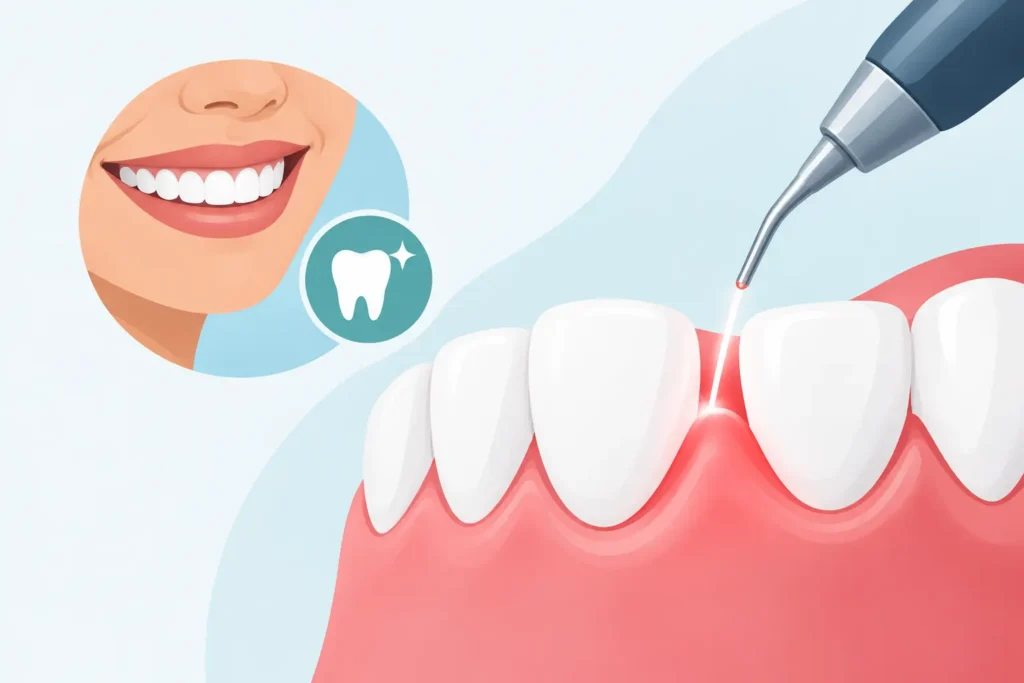
Laser gum treatment uses a focused dental laser to work on infected or inflamed gum tissue and the bacteria associated with gum disease. Depending on your individual needs, it may be used alongside professional cleaning, deep periodontal treatment or surgical care.
Gum disease begins when bacterial plaque builds up around and beneath the gumline. In its early stage, this can cause gingivitis: red, puffy gums that bleed easily. When infection progresses deeper, it can affect the bone and fibres that hold teeth in place. This is known as periodontitis, and it requires active professional management.
A laser is not a shortcut around good home care, nor is it right for every gum concern. It is a clinical tool that may allow your dentist to target specific areas with accuracy as part of a considered treatment plan.
Laser gum treatment benefits patients often value
The appeal of laser treatment is not simply the technology itself. It is the potential for care that feels more comfortable, measured and tailored to your mouth.
A gentler experience for sensitive gums
Many people postpone gum treatment because they associate it with discomfort or worry about a difficult recovery. Laser-assisted treatment can be less invasive than some traditional surgical approaches, which may mean less cutting and suturing in suitable cases.
Local anaesthetic may still be needed, particularly for deeper treatment, but the experience can feel more manageable for patients who are anxious about dentistry. Your comfort matters. We take time to explain what you may feel, agree on pain relief options and move at a pace that supports a calmer appointment.
Precision around delicate tissue
Dental lasers can be directed at targeted areas of diseased tissue and bacteria while helping preserve surrounding healthy gum tissue. That precision is particularly valuable where gums are inflamed, tender or difficult to access.
It does not mean a laser can restore gum or bone that has already been lost. However, by helping manage infection and inflammation, it may support healthier conditions for the tissues that remain. The earlier gum disease is identified, the more options there are for protecting your natural teeth.
Less bleeding and swelling for some patients
Lasers can help coagulate small blood vessels as they work. For appropriate treatment plans, this may reduce bleeding during the procedure and contribute to less post-treatment swelling.
Recovery varies. The extent of disease, the areas treated, your general health, smoking or vaping, medications and home-care habits all influence healing. A gentler procedure is still a procedure, so follow your dentist’s aftercare instructions closely and allow your body time to recover.
Support for bacterial control
Periodontal disease is driven by a complex bacterial environment beneath the gumline. Laser therapy may help reduce bacterial load in treated pockets, alongside the physical removal of plaque and calculus through professional periodontal cleaning.
This distinction matters. Laser treatment does not replace removing hardened deposits from teeth, and it cannot compensate for inconsistent brushing or missed maintenance visits. The best outcomes come from combining professional treatment with daily habits that protect the gumline.
A more comfortable return to routine
Some patients find they can return to gentle everyday activities sooner than they expect, particularly when laser treatment avoids more extensive surgery. You may still need to choose softer foods temporarily, avoid vigorous brushing over treated areas and pause smoking or alcohol while tissues heal.
Your dentist will give advice that reflects your treatment, rather than a one-size-fits-all checklist. If you experience increasing pain, swelling, persistent bleeding, fever or an unpleasant taste, contact the clinic promptly.
Is laser treatment suitable for every gum problem?
Not always. A responsible recommendation starts with a full assessment of your gums, teeth, bite, medical history and dental imaging where needed. We look at pocket depths, bleeding, plaque levels, recession, loose teeth and signs of bone loss before discussing the most suitable path forward.
Early gingivitis may respond beautifully to a thorough professional clean and improved home care, without laser treatment. More advanced periodontitis may need deep cleaning below the gums, laser-assisted care, referral to a gum specialist or, in some cases, surgery. Existing restorations, the shape of tooth roots and the severity of bone loss can also affect what is appropriate.
If you are pregnant, taking blood-thinning medication, managing diabetes or receiving treatment that affects immunity, let your dentist know. These factors do not automatically rule out treatment, but they can change the timing, approach and aftercare needed.
What happens at a laser gum consultation?
A personalised consultation should leave you clearer, not pressured. We begin by listening to what you have noticed: bleeding, bad breath, sensitivity, a change in gum shape, loose teeth or simply a feeling that something is not quite right.
Your dentist will assess your oral health and discuss the findings in plain language. If laser-assisted treatment is clinically suitable, you will understand why it has been suggested, what it involves, what alternatives are available and the likely costs and recovery expectations. We also consider the bigger picture, including stress, sleep, nutrition, oral hygiene routines and the treatment preferences that matter to you.
For patients seeking dentistry that feels more aligned with their values, this space for conversation can be as meaningful as the technology. You deserve choices that respect both clinical evidence and your personal comfort.
Protecting your results at home
Laser treatment can support periodontal care, but long-term gum health is maintained in small, consistent moments. Brush gently twice daily with a soft toothbrush, clean between teeth in the method recommended for you and attend your tailored hygiene appointments. If brushing causes bleeding, do not stop brushing the area. Instead, use a gentle technique and seek guidance, because ongoing bleeding needs assessment.
Smoking and vaping make gum disease harder to control and can slow healing. Dry mouth, frequent sugary snacks and clenching can also place extra strain on your mouth. Addressing these contributors with compassion, rather than judgement, gives your gums the best chance to settle.
A healthy smile should feel like a source of confidence, not another demand on your already full life. If your gums are bleeding or you have been told you have gum disease, a calm consultation can help you understand whether laser care has a place in restoring greater comfort, balance and peace of mind.