A dental implant is designed to become a strong, lasting part of your smile, but the first days after placement deserve a little extra gentleness. This dental implant recovery guide explains what is usually normal, how to support comfortable healing, and when it is wise to contact your dentist. Think of recovery as protected time for your body: a chance to slow down, nourish yourself well and let the surgical site settle.
Your own timeline may look different from someone else’s. Recovery can be influenced by the position of the implant, whether a tooth was removed at the same appointment, the need for bone grafting, your general health and habits such as smoking or vaping. Your dentist’s individual instructions always come first, especially where prescribed medicines and post-operative care are concerned.
Dental Implant Recovery Guide: Day by Day
The first 24 hours: protect the clot and rest
A little oozing, tenderness and mild swelling are common after implant surgery. If your dentist has provided gauze, bite with steady, gentle pressure for the period advised. Avoid repeatedly checking the area, vigorous spitting or rinsing, as these actions can disturb the clot that protects early healing.
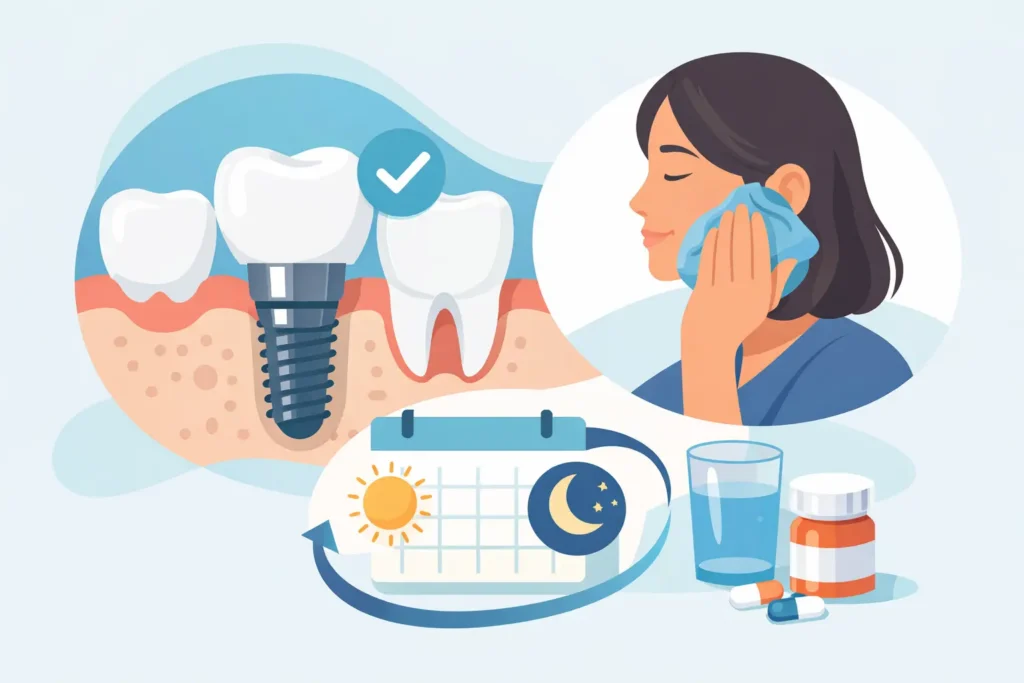
Plan for a quiet day at home. Rest with your head elevated on pillows and use a cool pack on the outside of your cheek in short intervals, with a cloth between the pack and your skin. This can help limit swelling and soothe the area. Take prescribed pain relief or medicines exactly as directed. If you are unsure whether an over-the-counter medicine is appropriate for you, check with your dentist or pharmacist rather than guessing.
Choose cool or lukewarm, soft foods such as yoghurt, blended soup that has cooled, mashed vegetables, scrambled eggs or a smoothie eaten with a spoon. Avoid hot drinks and alcohol for the period your clinician recommends. Do not use a straw, as suction can disrupt the surgical area. Keep sipping water so you stay hydrated, particularly if you have had sedation.
Days two to seven: swelling may peak, then ease
It can be surprising when swelling is more noticeable on the second or third day than it was immediately after treatment. For many people, this is part of the normal inflammatory healing response and should gradually improve afterwards. You may also notice slight bruising or a tight sensation when opening your mouth.
Continue with soft foods and chew on the opposite side where possible. Avoid hard crusts, nuts, seeds, chips, chewy lollies and anything that can press into the gum or lodge around the site. Even if you feel well, hold off on strenuous gym sessions, heavy lifting and high-impact exercise for the timeframe recommended by your dentist. Increased blood flow and pressure can make throbbing or bleeding more likely.
If you have a temporary tooth or provisional restoration, treat it as an aesthetic placeholder rather than a chewing tool unless your dentist has specifically advised otherwise. The implant needs a calm, stable environment while it begins to integrate with the jawbone.
Week two and beyond: comfort returns before healing is complete
By the second week, many patients are feeling more like themselves and can begin introducing more varied foods if their dentist agrees. However, feeling comfortable does not mean the implant has fully fused with the bone. Osseointegration is a gradual biological process that often takes months, and your final crown may be placed only once the implant is sufficiently stable.
Attend every review appointment, even if the site feels fine. These visits allow your dentist to check the gum tissue, remove sutures if required and make sure healing is progressing as planned. If bone grafting or a sinus lift formed part of your care, your recovery instructions may be more specific and the overall timeline may be longer.
Your Dental Implant Recovery Guide for Meals and Cleaning
Keeping the mouth clean after surgery supports healthy gums, yet the area needs a delicate approach. On the day of surgery, follow the instructions you were given about rinsing. From the next day, many patients are advised to use a gentle salt-water rinse or a prescribed mouth rinse, but timing and technique matter. Let the liquid move around the mouth softly rather than swishing forcefully.
Brush the rest of your teeth as usual with a soft toothbrush, taking care not to knock the surgical site. Your dentist will tell you when and how to clean closer to the implant, particularly if sutures are present. Do not probe the area with your tongue, fingernail or a toothpick. It is understandable to be curious, but leaving it undisturbed gives the gum tissue the best chance to settle.
Food choices should feel supportive rather than restrictive. Prioritise protein-rich, nourishing meals that are easy to manage: eggs, fish, soft legumes, cottage cheese, avocado, steamed vegetables and tender shredded chicken can all work as you progress. If you are drawn to a whole-body approach to wellbeing, this is also a useful time to prioritise sleep, hydration and regular meals. These basics help your body direct energy towards repair.
Smoking and vaping can significantly interfere with blood supply and wound healing, raising the risk of implant complications. Ideally, stop before surgery and remain smoke-free afterwards. If this feels difficult, speak honestly with your dental team so they can support a realistic plan for your care.
What Should Prompt a Call to Your Dentist?
A degree of discomfort is expected, but pain should generally become more manageable rather than intensify each day. Your dental team would always rather hear from you early than have you worry at home. Contact the clinic promptly if you notice any of the following:
- bleeding that continues despite following your post-operative instructions
- swelling that worsens after day three, or swelling that affects breathing or swallowing
- severe or increasing pain that is not relieved by the medicine recommended for you
- fever, a bad taste, pus or a persistent unpleasant odour from the area
- a loose implant, loose temporary tooth or a feeling that the implant is moving
Breathing difficulty, trouble swallowing or rapidly spreading swelling needs urgent medical attention. Do not wait for a routine appointment in these circumstances.
Creating a Calmer Recovery Experience
Dental recovery is not only physical. It can bring up anxiety, particularly if you have had difficult dental experiences in the past. Preparing your home before treatment can make the first evening feel far more manageable: have soft meals ready, arrange a quiet lift home if you are having sedation, set up water and medicines within easy reach, and give yourself permission to reschedule non-essential commitments.
At Dental + Skin Clinic, we understand that comfort, treatment preferences and whole-body wellbeing matter alongside clinical outcomes. A personalised conversation before implant surgery can cover the materials involved, your health history, anxiety support, recovery planning and any questions you may have about caring for your mouth in a way that feels aligned with your values.
The most reassuring recovery is rarely the one where you push through quickly. It is the one where you listen to your body, follow your tailored instructions and give your new implant the quiet, steady conditions it needs to become part of a healthy, confident smile.