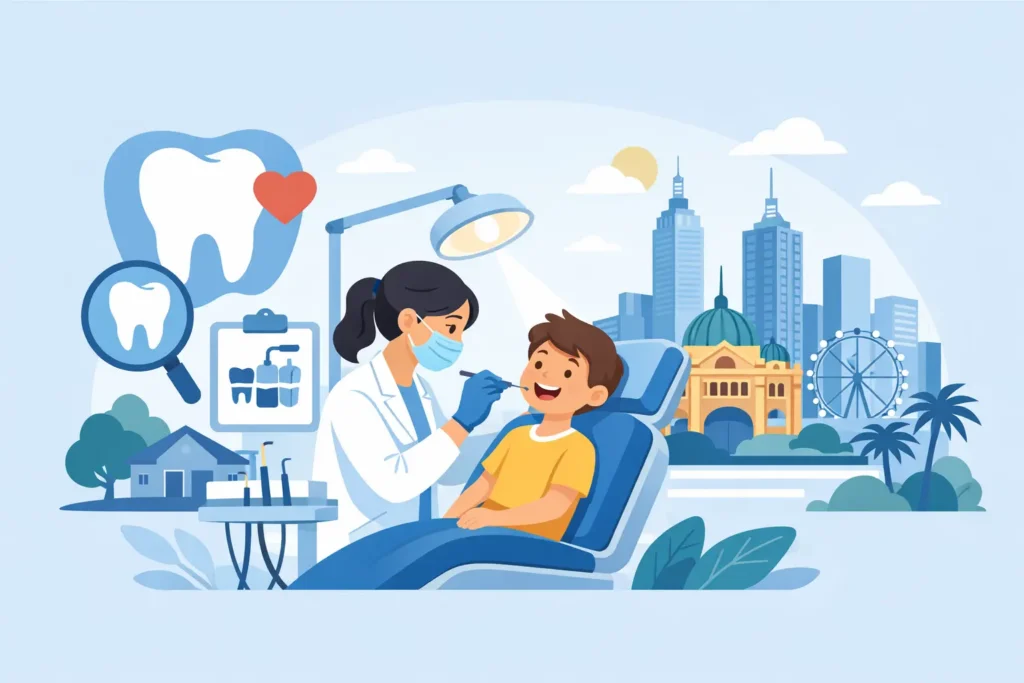
A child who happily chats in the waiting room can still feel unsure once they see the dental chair. That is why free kids dental checkups can be such a valuable starting point for Melbourne families: they create space for prevention, reassurance and small concerns to be noticed before they become painful or costly.
For eligible children, the Australian Government’s Child Dental Benefits Schedule (CDBS) may help cover essential dental care. Yet “free” can mean different things depending on your child’s eligibility, available benefit balance and the provider’s billing arrangements. Understanding the details helps you make a calm, confident decision for your child’s smile and overall wellbeing.
What are free kids dental checkups?
A dental checkup is a preventative appointment where the dentist looks at your child’s teeth, gums, bite and jaw development. They may also assess how effectively your child is brushing, whether there are signs of decay, and whether habits such as thumb-sucking, mouth breathing, grinding or frequent snacking could be affecting their oral health.
Under the CDBS, eligible children and teenagers can access a set amount of dental benefits over two calendar years for a range of basic services. This can include examinations, X-rays when clinically needed, cleans, fissure seals, fillings, extractions and some other treatments. The available amount and covered items can change, so it is wise to ask the clinic to check your child’s current entitlement before booking.
A checkup may be fully covered when your child is eligible, has enough CDBS balance remaining and the practice can claim the relevant service through the scheme. If a service sits outside the scheme, the benefit is exhausted, or additional care is recommended, there may be an out-of-pocket cost. You should always be told about this beforehand and asked for consent before treatment proceeds.
Who may be eligible for CDBS care?
CDBS eligibility is generally assessed through Medicare and is linked to certain government payments. Children aged from birth to 17 years may qualify, although eligibility is not automatic for every family and can vary from year to year.
The simplest approach is to have your child’s Medicare details available when you contact a dental practice. The team can help check whether benefits are available and explain how they may be used for the appointment. This removes the uncertainty before your child arrives and lets you focus on creating a positive first experience.
Even if your family is not eligible for CDBS, a routine checkup remains one of the most practical investments in your child’s health. Early prevention is usually gentler, simpler and less disruptive than responding to a toothache after it has already affected sleep, school or family routines.
Why a checkup is about more than cavities
Children’s mouths change quickly. Baby teeth guide speech, eating and the position of adult teeth, so they deserve thoughtful care even though they will eventually fall out. A small cavity in a baby tooth can still cause discomfort, infection and anxiety around eating or brushing.
At a child-focused appointment, the dentist also considers the bigger picture. Crowding, an uneven bite, delayed tooth eruption and enamel changes may be easier to guide when noticed early. Gum inflammation can point to areas that need more careful brushing, while wear on teeth may suggest clenching or grinding during sleep.
For families who value a whole-body approach, this conversation can be especially reassuring. Oral health does not sit apart from daily life. Sleep quality, hydration, food choices, breathing patterns, sensory sensitivities and emotional comfort can all influence a child’s dental experience. A personalised plan recognises that no two children arrive with the same needs.
What happens at a gentle children’s dental visit?
A good first visit should not feel rushed. Some children are ready to sit in the chair and open wide straight away. Others may need time to explore the room, meet the team or have a parent nearby. Both responses are completely normal.
The appointment often begins with a relaxed chat about brushing, favourite foods, any sore spots and previous experiences. The dentist may count the teeth, look at the gums and assess the bite. If X-rays are recommended, they should be explained in clear, age-appropriate language and only taken when they will assist clinical decision-making.
Your child may receive practical guidance on brushing technique, a suitable toothbrush and ways to make routines easier at home. Rather than using fear or pressure, a nurturing approach helps children feel capable. Tiny wins matter: sitting in the chair, letting the dentist look at one tooth, or practising with a mirror can build confidence for the next visit.
Preventative recommendations should also reflect your family’s preferences. Your dentist can explain the benefits and limitations of available options, including remineralisation approaches such as hydroxyapatite where appropriate, so you can make an informed choice that feels aligned with your values and your child’s clinical needs.
When should your child have a checkup?
Many children benefit from seeing a dentist by their first birthday or within six months of their first tooth appearing. From there, the ideal review schedule depends on their decay risk, diet, oral hygiene, dental development and comfort level. Some children need six-monthly visits, while others may be advised to return at a different interval.
Do not wait for a routine appointment if your child has toothache, swelling, a knocked or broken tooth, bleeding that does not settle, a facial injury or a persistent sore in the mouth. Sudden pain can be unsettling for children and parents alike, and prompt advice can protect both comfort and the tooth.
It is also worth booking sooner if you notice your child avoiding chewing on one side, waking at night in pain, complaining that cold foods hurt, or becoming distressed when brushing. Children do not always have the words to describe dental discomfort. Changes in mood, eating or sleep can sometimes be the first clue.
Preparing your child without making it a big deal
The language you use before a dental visit shapes expectations. Keep it simple and positive: the dentist is going to count their teeth, check their smile and help keep their mouth healthy. Avoid promising that nothing will happen or using words that can make a child anxious, such as “needle”, “drill” or “it won’t hurt”. The dental team can introduce unfamiliar steps in a way your child can understand.
A morning or early afternoon appointment can work well for children who are tired or overwhelmed later in the day. Let the practice know in advance if your child has sensory needs, a strong gag reflex, previous dental anxiety or a medical condition. Small adjustments, such as a slower pace, extra explanation or a quiet moment before starting, can make a meaningful difference.
After the appointment, praise their effort rather than focusing only on whether they sat perfectly still. A child who felt heard and safe is more likely to carry that confidence into future care.
Making prevention feel sustainable at home
A dental checkup works best when it supports ordinary routines, not when it adds pressure to already busy family life. Twice-daily brushing with age-appropriate toothpaste, regular water between meals and a balanced approach to sugary snacks are strong foundations. The exact advice around toothpaste, fluoride and other preventative products should be discussed with your dentist, particularly if your family prefers lower-tox options.
Try to make brushing predictable rather than negotiable. A song, a timer, a favourite character toothbrush or brushing together can turn a daily battle into a familiar ritual. If your child resists, start with what they can manage and build gradually. Consistency is more useful than perfection.
At Dental + Skin Clinic, children’s care is approached as a gentle introduction to lifelong oral wellbeing, with room for questions, choices and a pace that respects each child. Before booking, ask whether CDBS benefits can be checked for your child and whether the proposed appointment can be bulk billed.
A calm dental visit today can give your child something more lasting than a clean bill of health: the sense that caring for their smile is safe, supported and simply part of feeling well.