Seeing pink in the sink after brushing is easy to dismiss, especially when it does not hurt. Yet bleeding gums are not usually something to simply brush harder and hope will disappear. The right gum treatment for bleeding gums begins by understanding why the tissue is inflamed, then creating a gentle, personalised plan to help your mouth return to balance.
For many people, the cause is early gum inflammation that can be improved with consistent care. For others, bleeding is a sign that bacteria have settled below the gumline and need professional attention. Either way, your gums deserve the same calm, proactive care you would give any other part of your wellbeing.
Why do gums bleed?
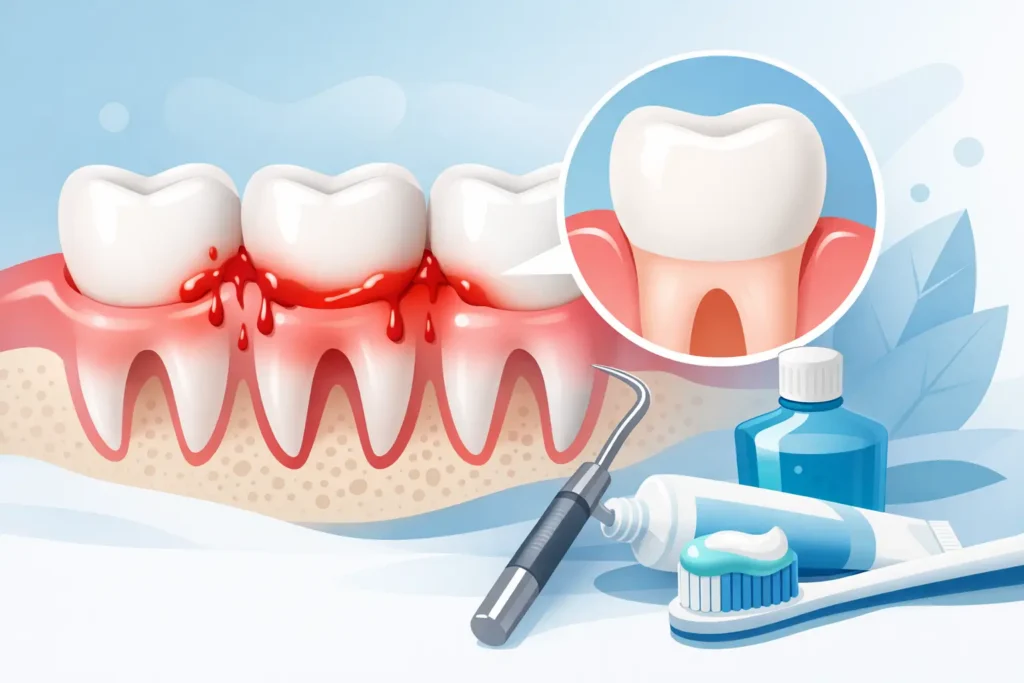
Healthy gums should generally not bleed during brushing, flossing or eating. The most common reason they do is plaque: a soft bacterial film that collects around teeth and along the gumline. When plaque is not removed thoroughly, it irritates the gums. They may become tender, puffy, red or prone to bleeding. This early stage is often called gingivitis.
If inflammation continues untreated, it can progress to gum disease, also known as periodontitis. At this stage, the supporting structures around the teeth can be affected. Gums may pull away from teeth, pockets can form below the gumline, and bone loss may occur over time. Gum disease is often quiet rather than painful, which is why regular dental checks matter even when your smile looks healthy.
Bleeding can also be influenced by vigorous brushing, a new flossing routine, poorly fitting dental work, smoking or vaping, hormonal changes, some medications, dry mouth, nutritional factors and health conditions such as diabetes. Pregnancy-related gum changes are common too. A careful assessment helps separate a temporary trigger from a concern that needs deeper treatment.
Gum treatment for bleeding gums starts with an assessment
There is no one-size-fits-all solution for bleeding gums. A reassuring dental visit should start with listening: when did the bleeding begin, does it happen every day, have you noticed bad breath or sensitivity, and are there any changes in your general health, stress or medication?
Your dentist will assess the gumline, look for plaque and tartar build-up, measure any gum pockets where appropriate, and check for signs of recession, infection or decay. X-rays may be recommended if there is concern about changes beneath the gums or around the supporting bone.
This is not about judgement. Even people who brush diligently can develop gum inflammation in hard-to-reach areas, around crowded teeth, crowns, implants or orthodontic appliances. The goal is to understand what is happening in your own mouth and choose care that feels clear, comfortable and achievable.
Professional care can reset the gumline
When hardened plaque, known as calculus or tartar, is present, brushing alone cannot remove it. A professional dental clean gently clears deposits from the teeth and gumline, reducing the bacterial load that keeps gums inflamed. Many patients notice fresher breath and less bleeding as their gums begin to settle.
If gum pockets are deeper or there are signs of established gum disease, treatment may involve a more detailed clean below the gumline. This is sometimes completed over more than one appointment, allowing each area to be treated carefully and comfortably. Local anaesthetic can be used if needed, particularly where gums are tender or treatment is more extensive.
The trade-off is that a deep clean can leave teeth or gums temporarily sensitive, especially if gum recession has exposed root surfaces. That sensitivity is usually manageable and should be discussed before treatment begins. Avoiding the problem, however, can allow inflammation to progress, making treatment more complex later.
At Dental + Skin Clinic, gum care is approached as part of a wider picture. Oral inflammation can affect comfort, confidence, sleep and how you feel in your own body. Gentle clinical care, clear education and respect for your personal preferences can make it easier to maintain the changes that protect your smile over time.
Gentle home habits that support healing
Professional treatment creates the foundation, but your everyday routine is what helps gums stay stable. The aim is not to scrub harder. It is to remove plaque consistently without traumatising delicate gum tissue.
Choose a soft toothbrush and use light pressure, angling the bristles gently towards the gumline. Move slowly around every tooth, including the inside surfaces that are easy to miss. An electric toothbrush can be useful for some people because it supports a consistent technique, but a manual brush can work very well when used carefully.
Clean between your teeth once a day. Floss, interdental brushes and water flossers all have a place, depending on the spaces between your teeth and the shape of your gums. Interdental brushes are often particularly helpful where there are larger gaps, bridges or gum recession. Your dental team can show you the size and technique that suits your mouth.
If your gums bleed when you first begin cleaning between your teeth, do not automatically stop. Mild bleeding from inflamed gums can improve within a week or two of gentle, daily cleaning. If it continues, becomes heavier, or you are unsure whether you are using the right method, arrange an appointment rather than pushing through discomfort.
A balanced diet, regular hydration and reducing frequent sugary snacks also support the oral environment. Smoking and vaping can mask gum bleeding while increasing the risk of gum disease, so quitting or cutting back can be a meaningful step for both gum and whole-body health.
When bleeding gums need prompt attention
Book a dental appointment soon if bleeding lasts longer than two weeks despite careful home cleaning, if it happens spontaneously, or if it is accompanied by persistent bad breath, swelling, pus, loose teeth or a change in how your bite feels. Receding gums, new spaces between teeth and sensitivity around the roots also deserve assessment.
Seek urgent medical or dental advice for heavy bleeding that will not stop, facial swelling, fever, severe pain, or bleeding accompanied by unusual bruising or feeling unwell. These signs may not be caused by a routine gum problem and should not be managed at home.
It is also wise to tell your dentist if you take blood-thinning medication, are pregnant, have diabetes, have recently started a new medication or are undergoing medical treatment. Your dental care can then be planned safely and thoughtfully around your needs.
Maintaining results is where lasting change happens
Gum health is not won in one clean. Once inflammation has settled, regular maintenance appointments help catch plaque build-up before it becomes a larger problem. The ideal interval varies. Some people do well with six-monthly cleans, while those with a history of gum disease, implants, dry mouth or other risk factors may benefit from more frequent reviews.
These visits are also a chance to refine your home routine. A brush head may need changing, an interdental brush size may no longer fit, or a crown or filling may be creating a plaque trap that needs attention. Small adjustments can make a substantial difference over the years.
A calmer way forward for sensitive gums
Bleeding gums are common, but they are still a message worth hearing. With a gentle assessment, professional cleaning where needed and a realistic home-care routine, many people can reduce inflammation and feel more confident about their oral health.
If your gums are bleeding, let this be a caring prompt rather than a source of worry. A personalised dental consultation can help you understand the cause, choose treatment that feels aligned with your values, and give your teeth the calm, supportive environment they need to thrive.