A smile makeover should never begin with a catalogue of veneers or a promise of a perfectly white smile. It begins with you: how you feel when you laugh, what you notice in photos, whether you avoid showing your teeth, and how your mouth functions each day. Understanding how smile makeovers are planned can make the process feel far less daunting and help you make choices that support both confidence and long-term oral wellbeing.
For some people, the goal is a subtle refresh that still looks completely like them. For others, it may be restoring worn, broken or missing teeth after years of putting their own needs aside. A thoughtful plan respects the difference. It considers aesthetics, certainly, but also your bite, gum health, comfort, lifestyle and personal preferences around materials and treatment.
How Smile Makeovers Are Planned Around You
A smile makeover is not one treatment. It is a carefully organised combination of treatments selected for your particular smile. This may include whitening, composite bonding, veneers, crowns, gum contouring, orthodontic alignment, implants or replacement teeth. Not everyone needs every option, and a premium result is rarely about doing more dentistry than necessary.
The first consultation is a conversation as much as a clinical assessment. Your dentist will ask what you would like to change, what you already like about your smile, and what has made dental care difficult in the past. If you have experienced anxiety, sensitivity, a gag reflex or a sense of overwhelm in dental settings, these details matter. They help shape a pace of care that feels calm, supported and realistic.
At Dental + Skin Clinic, this conversation can also include your wider wellbeing goals. Some patients are looking for lower-tox material choices, would prefer to avoid routine fluoride, or want to discuss options such as hydroxyapatite. Others simply want to understand every stage before agreeing to it. Personalised dentistry means making room for informed preferences without pressure.
Starting with oral health and function
Before changing the appearance of teeth, a responsible smile makeover plan checks the foundations. Teeth and gums need to be stable enough to support cosmetic work. This can mean treating bleeding gums, decay, old leaking fillings, infection, tooth wear or jaw discomfort first.
Your bite is equally important. If teeth are chipped because of clenching or grinding, placing veneers without addressing the pressure may lead to damage later. A custom mouthguard, bite adjustment, restorative treatment or a staged plan may be recommended, depending on what is causing the wear. A beautiful smile should feel comfortable to use, not merely look good in a mirror.
This part of planning can feel less exciting than choosing a shade, yet it protects your investment. Healthy gums frame every smile. Stable teeth and a balanced bite help cosmetic dentistry remain comfortable and durable over time.
Looking at proportion, personality and facial harmony
Smile design is highly personal. Two people can request “straight, white teeth” and need very different solutions. Your dentist considers the shape and size of your teeth, gum line, lip movement, facial proportions and the amount of tooth visible when you speak and smile.
The aim is not to create a copy-and-paste Hollywood look. It is to create harmony. Softer, rounded shapes can suit one face, while more defined edges may suit another. Some people prefer a brighter, more polished finish; others want a natural shade with small variations that keep the smile believable.
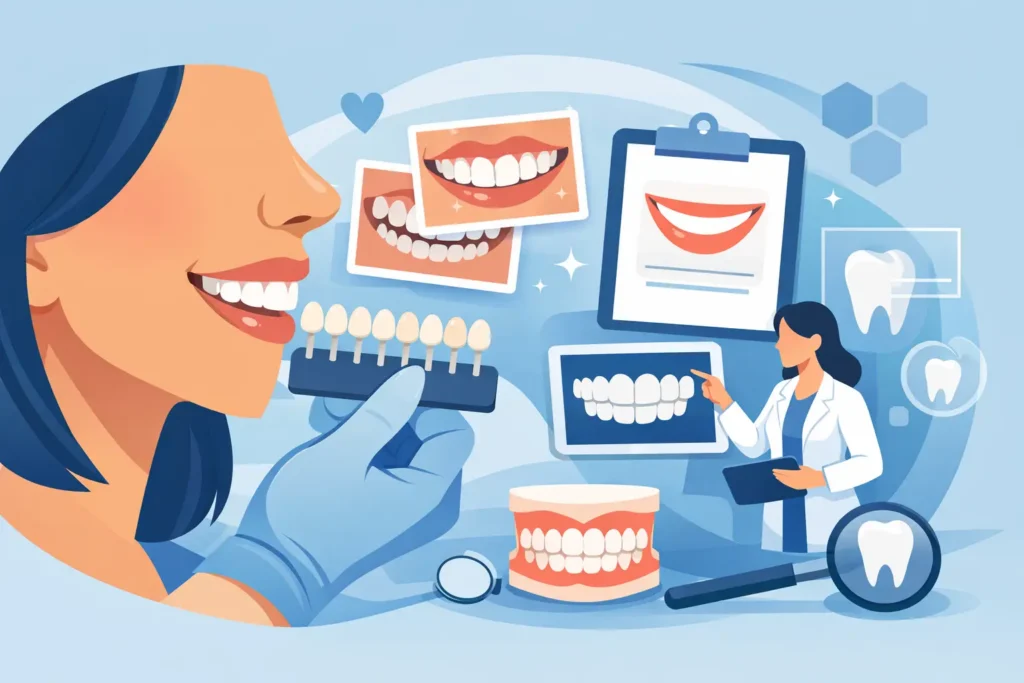
Photographs, digital records, X-rays and impressions or scans may be used to understand these details. Where appropriate, a preview or temporary trial smile can help you see and feel proposed changes before final restorations are made. This is particularly valuable when planning several veneers or crowns, because it gives you a meaningful voice in the final look.
Choosing the Right Treatments, Not the Most Treatments
Once the clinical findings and aesthetic goals are clear, your dentist can explain the most suitable pathways. Often, there is more than one.
For mild discolouration, professional whitening may create the change you want without altering tooth structure. For small chips, uneven edges or gaps, composite bonding can be a conservative option. Veneers may be considered when tooth shape, colour or surface damage requires a more significant change. Crowns are generally used where a tooth needs greater structural support, while implants may replace missing teeth and help restore function as well as appearance.
The trade-off is important. More conservative treatments can preserve more natural tooth structure but may require maintenance or offer less dramatic change. Porcelain restorations can provide strength and colour stability, yet they require careful planning and are not always reversible. Your dentist should clearly explain what each option involves, how it may age, the expected maintenance and any limitations.
This is also the point to discuss material preferences. A holistic approach does not mean making decisions based on fear. It means taking your concerns seriously, reviewing suitable options together and choosing a treatment approach that aligns with your health values wherever clinically appropriate.
Planning in stages can be the wisest choice
A full smile transformation does not always need to happen in a single block of appointments. Some patients benefit from beginning with gum care and a clean, then whitening, followed by bonding or veneers once the new tooth shade has settled. Others may need to address a damaged tooth or missing tooth before considering cosmetic refinements.
Staging can be gentler on your time, budget and nervous system. It also gives you an opportunity to adjust the plan as you go. If whitening achieves more than expected, you may decide fewer teeth need restorative work. If a temporary smile reveals that you would like a slightly softer shape, that feedback can guide the final result.
A clear treatment sequence also helps with practical planning. You should understand how many visits are likely, whether temporary restorations are needed, what recovery may feel like and how to care for your smile between appointments. Flexible payment options may make a staged approach more manageable, but the clinical order should always come first.
Comfort Belongs in the Plan
For many people, the biggest barrier to cosmetic dentistry is not deciding what they want. It is the worry of sitting in the dental chair. A nurturing smile makeover plan accounts for this from the start.
Tell your dental team if you have had a difficult past experience, feel uneasy around needles, struggle to keep your mouth open or need extra reassurance. There are many ways to make care feel more manageable, from slower appointments and clear stop signals to gentle communication and sleep dentistry where suitable.
Comfort also includes emotional comfort. Cosmetic treatment can bring up vulnerability, especially if you have hidden your smile for years. You deserve a space where questions are welcomed and where you can take time before deciding. Confidence is not created by being rushed into a treatment. It grows when the plan feels considered, understood and truly yours.
What Happens Before the Final Smile?
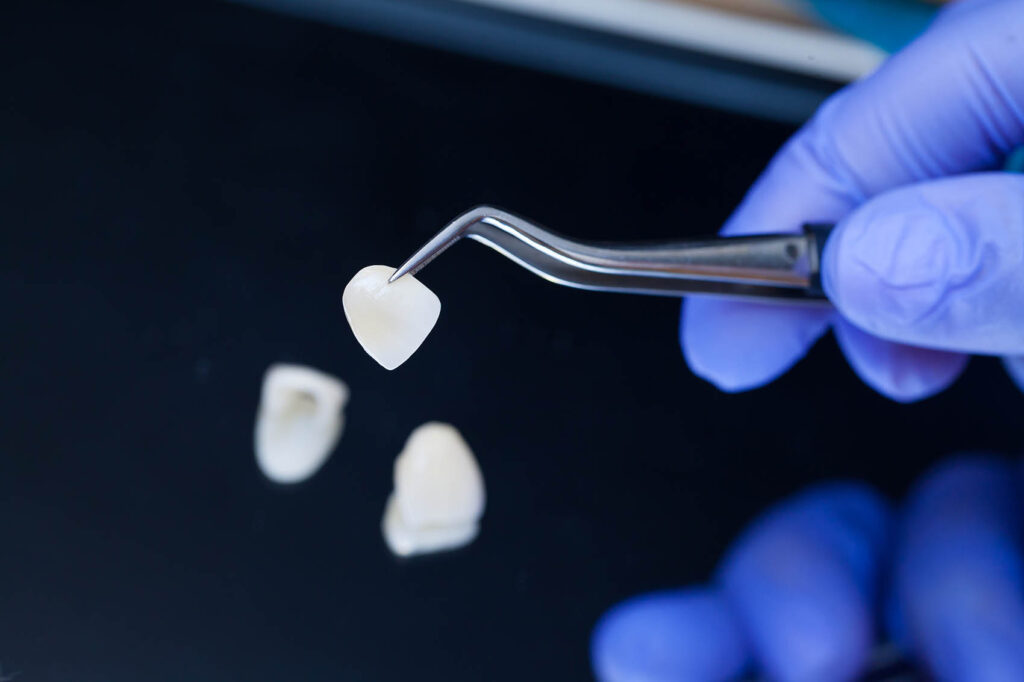
Once you have agreed on the direction, your dentist will create a detailed clinical plan. This may include preparing teeth conservatively where required, taking final scans or impressions, selecting shades and working with a dental laboratory to create custom restorations. Temporary veneers or crowns may be placed while final porcelain restorations are being made.
At the fitting appointment, your dentist checks the appearance, bite, comfort and fit carefully. Small adjustments are normal. The final restorations are only placed once the result feels right clinically and aesthetically.
Aftercare is part of the makeover, not an afterthought. Regular cleans and examinations, a night guard if you grind, thoughtful home care and avoiding habits such as biting hard objects can help protect the result. Whitening may need occasional top-ups, while bonding can require polishing or repair over time. Knowing this upfront helps keep expectations grounded and your smile looking its best.
The most meaningful smile makeovers do more than change teeth. They give you the quiet freedom to speak, laugh and be photographed without holding back. Start with a conversation, ask every question you need to ask, and choose a plan that feels as good for your wellbeing as it looks in your smile.