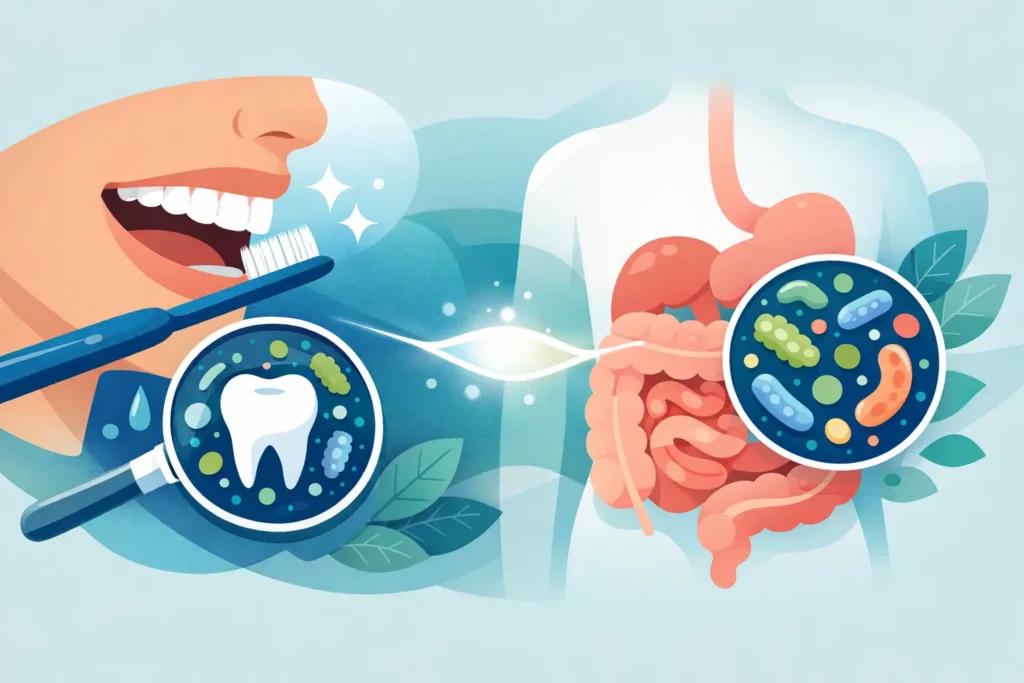
A bleeding gumline, persistent bad breath or a dry mouth may feel like concerns confined to the bathroom mirror. Yet oral health and gut health are connected through a shared ecosystem of bacteria, immune activity, inflammation and everyday habits. Your mouth is the beginning of your digestive system, so caring for it thoughtfully can be one meaningful part of caring for your whole body.
At the same time, the connection is not a reason to blame every digestive symptom on your teeth, or to assume that a probiotic will fix gum disease. Your body deserves a calmer, more personalised approach: clear dental assessment, appropriate medical care when needed, and practical habits that support balance over time.
How oral health and gut health influence each other
The mouth is home to hundreds of species of microbes. Many are harmless or helpful when they live in balance, but problems can arise when certain bacteria build up around the teeth and beneath the gumline. This is particularly relevant when plaque is allowed to mature, gums are inflamed or untreated gum disease is present.
Every day, saliva and swallowing carry oral bacteria into the digestive tract. For most healthy people, the stomach and gut provide several protective barriers, and swallowing oral bacteria is a normal part of life. The picture can become more complex when there is significant gum inflammation, poor saliva flow, smoking, a highly processed diet, frequent alcohol intake or a health condition that affects immunity.
Research has found associations between periodontitis, which is advanced gum disease, and changes in the gut microbiome. Inflammation is likely part of the conversation too. Inflamed gums can release inflammatory signals into the bloodstream, while chronic inflammation elsewhere in the body may make the gums more vulnerable. Association does not prove that one condition directly causes the other, but it is a useful reminder that the mouth should not be treated in isolation.
For a wellness-led dental experience, this means looking beyond a quick polish. We consider the condition of your teeth and gums, your saliva, your daily routines, your comfort in the chair and the wider health context you choose to share.
The gut can show up in your mouth
Digestive health concerns do not always create obvious dental symptoms, but some can affect the oral environment. Reflux, for example, may bring stomach acid into the mouth. Over time, this can soften and wear enamel, particularly on the inside surfaces of teeth. Teeth may become more sensitive, look thinner or appear more translucent at the edges.
Dry mouth is another issue worth taking seriously. It can be related to dehydration, mouth breathing, some medications, stress, ageing or medical conditions. Saliva does much more than keep the mouth comfortable. It helps wash away food particles, buffers acids and supports the natural remineralisation process. When saliva is reduced, the risk of decay, gum irritation and bad breath can increase.
Nutrient absorption may also matter. If a digestive condition affects how well the body absorbs nutrients, some people experience mouth ulcers, a sore tongue, changes to the corners of the lips or slower tissue healing. These signs are not diagnostic on their own, and they can have many causes. They are, however, useful information to discuss with your dentist, GP or relevant health practitioner.
Persistent bad breath deserves a gentle, thorough assessment too. It often begins in the mouth, where tongue coating, gum disease, untreated decay or dry mouth may be contributing. Occasionally, digestive concerns can play a role. Rather than masking the odour with strong mouthwash, it is more helpful to identify what is happening beneath it.
When reflux affects enamel
If you experience heartburn, regurgitation, an acidic taste or unexplained enamel wear, tell your dental team. A dentist can monitor changes to your tooth surfaces and discuss protective strategies tailored to your situation. It is also wise to speak with your GP about ongoing reflux, especially if symptoms are frequent, disruptive or worsening.
Avoid brushing immediately after an episode of reflux or vomiting. Acid temporarily softens enamel, and brushing straight away can increase wear. Rinsing gently with water first and waiting before brushing is usually kinder to the teeth.
Gum inflammation is not just a cosmetic concern
Healthy gums are generally pale pink or coral, firm, and do not bleed during brushing or flossing. Bleeding is common, but it should never be dismissed as normal. It can be an early sign that plaque is irritating the gumline.
Gingivitis is often reversible with consistent home care and professional cleaning. Periodontitis is more serious, involving damage to the supporting structures around the teeth. It requires tailored treatment and ongoing maintenance to help protect your smile.
This matters for gut health because a chronically inflamed mouth can add to the body’s overall inflammatory burden. It also matters because gum disease can progress quietly. You may not feel pain until later stages, which is why preventive appointments remain valuable even when your teeth feel fine.
A caring dental consultation should never be about shame. There are many reasons oral health routines can slip: nausea, anxiety, busy family life, sensory sensitivity, medication changes or simply not knowing which advice to trust. Gentle support and a plan you can realistically follow will always be more effective than perfectionism.
Everyday habits that support a healthier mouth and gut
Small, consistent choices tend to have more impact than extreme cleanses or complicated protocols. A balanced eating pattern that includes fibre-rich plant foods can support the gut microbiome, while limiting frequent sugary snacks and drinks helps reduce acid attacks on teeth. The key word is frequent. Sipping sweetened drinks or grazing throughout the day can keep the mouth in an acidic cycle, even if the total amount seems modest.
Aim to brush twice daily with a soft toothbrush and a toothpaste that suits your preferences and dental needs. At Dental + Skin Clinic, we respect that some patients prefer lower-tox options and hydroxyapatite-based toothpaste rather than routine fluoride use. The best choice depends on your individual decay risk, existing dental work, diet, saliva flow and health history, so personalised advice matters.
Cleaning between the teeth each day is equally valuable. Floss, interdental brushes or another suitable tool can remove plaque where a toothbrush cannot reach. If your gums bleed at first, do not stop automatically. Gentle, consistent cleaning often improves bleeding, though persistent bleeding should be assessed.
The following four habits can support both oral comfort and overall balance:
- Drink water regularly, particularly if you wake with a dry mouth or have a busy, coffee-filled day.
- Choose meals and snacks that are satisfying enough to reduce constant grazing, with protein, healthy fats and fibre where appropriate.
- Include naturally fermented foods if they agree with you, but remember they are not a replacement for dental treatment or prescribed medical care.
- Prioritise sleep and stress support, as both can affect immune function, dry mouth, jaw clenching, digestive comfort and the consistency of your self-care routines.
Be mindful that some wellness drinks are highly acidic. Kombucha, lemon water, apple cider vinegar drinks and sparkling water can be enjoyed by some people, but frequent sipping may erode enamel. Have acidic drinks with a meal where possible, use a straw if appropriate, then rinse with plain water.
A personalised approach is especially valuable
There is no one oral microbiome test, supplement or diet that can promise perfect gut health. Likewise, not every person with bloating needs a dental intervention, and not every person with gum disease has a gut problem. Good care starts by understanding your symptoms, risks and preferences without making assumptions.
If you have recurring mouth ulcers, bleeding gums, reflux-related tooth wear, dry mouth, bad breath, changes in your taste or sensitivity, a dental check-up can provide useful clarity. If digestive symptoms are persistent, severe or accompanied by unexplained weight loss, blood in the stool, difficulty swallowing or significant pain, seek prompt medical advice from your GP or emergency care where appropriate.
For Melbourne families seeking holistic dentistry reimagined, the goal is not to chase every trend. It is to create a sanctuary for your teeth while respecting the relationship between your oral health, comfort and wider wellbeing. A calm consultation can help you understand what your mouth is telling you and choose next steps that feel aligned, informed and genuinely sustainable.