A veneer should never feel like a rushed cosmetic decision. It becomes part of how you smile in photos, speak in meetings and feel when you catch your reflection. When weighing up porcelain veneers vs composite, the better choice is not simply the material that looks brightest or costs less upfront. It is the option that respects your natural teeth, your lifestyle, your aesthetic goals and the way you want to feel throughout treatment.
At Dental + Skin Clinic, we see cosmetic dentistry as a considered form of care. Your smile can be beautifully refined while still feeling like you – balanced, natural and comfortable.
Porcelain veneers vs composite: the core difference
Both porcelain and composite veneers are thin coverings used to improve the visible front surface of teeth. They can help address discolouration that does not respond well to whitening, small chips, uneven edges, minor gaps and teeth that appear short or irregularly shaped.
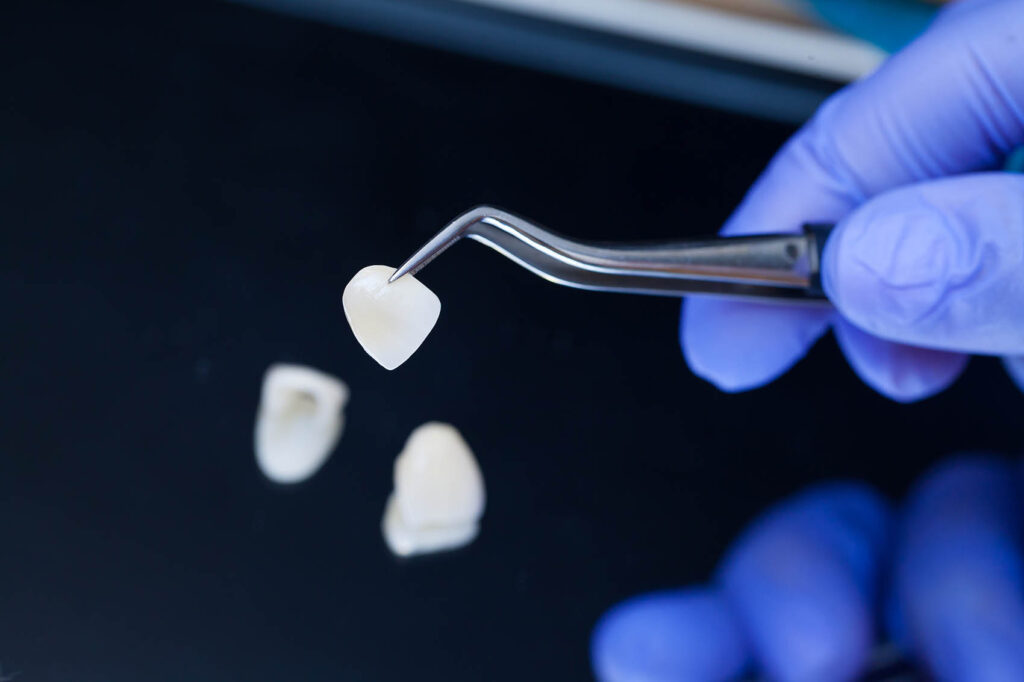
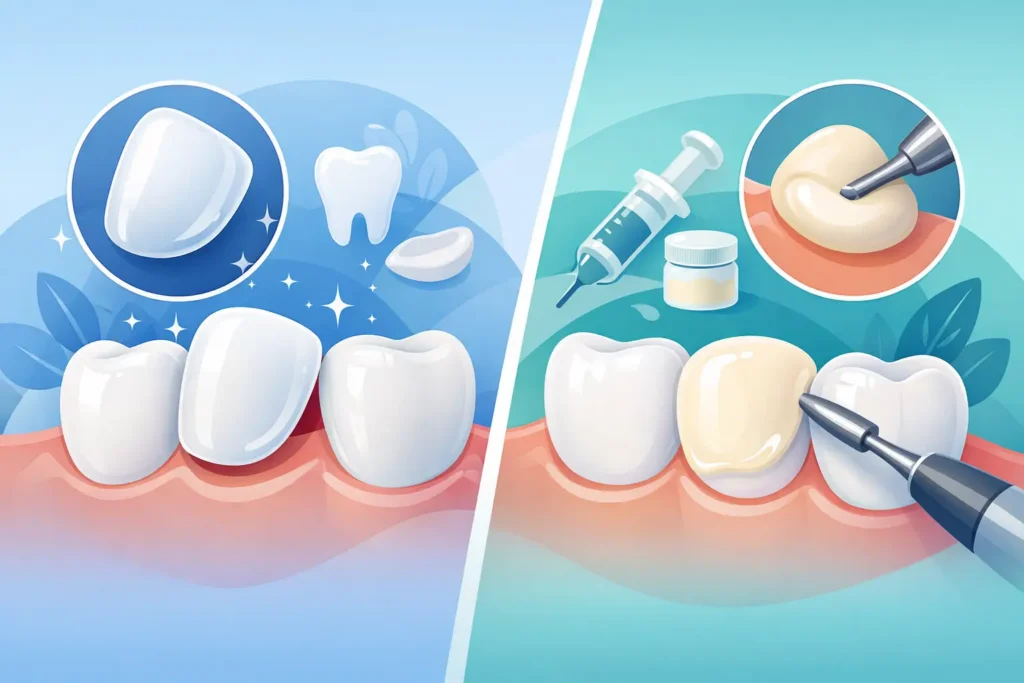
The difference lies in the material and the process. Porcelain veneers are custom-made ceramic shells, crafted by a dental laboratory and bonded to the teeth at a later appointment. Composite veneers are created from tooth-coloured resin, usually shaped and polished directly on the teeth by your dentist.
Neither is automatically superior. Porcelain is often chosen for its longevity and light-reflecting qualities, while composite can be a more conservative and flexible pathway for the right smile. The most suitable option depends on how much change you are seeking, the condition of your enamel, your bite and your preferences around cost, maintenance and tooth preparation.
Porcelain veneers: refined detail and lasting colour
Porcelain is prized for its translucency. High-quality ceramic can reflect light in a way that closely resembles natural enamel, helping veneers look dimensional rather than flat or opaque. This makes porcelain a beautiful option for patients seeking a polished, premium smile makeover, particularly across several front teeth.
Porcelain is also highly resistant to staining. Coffee, tea, red wine and richly coloured foods may still affect the natural teeth around veneers, but the porcelain itself generally holds its shade well. With attentive home care and regular dental visits, porcelain veneers can often last 10 to 15 years or longer, although there is no permanent cosmetic restoration.
The trade-off is that porcelain veneers commonly require some enamel preparation to create space for the ceramic and achieve a natural profile. The amount varies significantly. In some cases it is minimal; in others, more reshaping is required. Because enamel does not grow back, this step deserves a calm, thorough conversation before you proceed.
Porcelain is also more costly at the outset. It involves detailed planning, custom laboratory work and multiple appointments. If a porcelain veneer chips or fractures, it usually needs replacement rather than a simple chairside repair.
Porcelain may suit you if
Porcelain can be an excellent fit if you want a stable, long-term shade, have several teeth you would like to refine, or are seeking a highly natural finish with detailed control over shape and symmetry. It may also be appealing if you prefer a more durable material and are comfortable with the investment and potential tooth preparation involved.
Composite veneers: conservative, adaptable and repairable
Composite veneers use a carefully layered resin that is sculpted directly onto the tooth. In skilled hands, composite can soften sharp edges, close small spaces, improve proportion and create a fresher, more harmonious smile – often in one appointment.
One of composite’s greatest advantages is conservatism. Depending on the starting tooth shape and the result you are after, little to no enamel may need to be removed. This can make composite especially attractive to patients who wish to preserve as much natural tooth structure as possible, or who want to try a subtle cosmetic change before committing to ceramic veneers.
Composite is generally more affordable per tooth than porcelain, and repairs are usually straightforward. A small chip can often be added to, reshaped and polished at a future visit. This practical flexibility suits many active lives, especially for people who have a history of minor chipping or prefer an option that can evolve over time.
There are limitations. Composite is more porous than porcelain and can gradually pick up stains, particularly with frequent coffee, tea, red wine or smoking. It may lose some lustre over the years and generally needs more regular polishing, maintenance or replacement. Its expected lifespan is often around five to seven years, though habits, bite forces and care make a substantial difference.
Composite may suit you if
Composite may be the right starting point if your concern is relatively minor, you value minimal intervention, or you would like a more accessible way to enhance your smile. It can also be a thoughtful choice for younger adults whose teeth and facial aesthetics may still change, provided your dentist considers the health and stability of your bite first.
Appearance is about more than whiteness
A beautiful veneer is not necessarily the whitest one. An overly bright or bulky result can draw attention for the wrong reasons, while a well-designed smile tends to look rested, healthy and in proportion with your face.
Whether you choose porcelain or composite, planning matters more than choosing a stock shade. Your dentist should consider facial features, lip movement, skin tone, tooth proportions, gumline symmetry and how the teeth meet when you bite. Small choices – such as a softer edge, a touch of translucency or a less uniform shape – can keep the result elegant and believable.
At a consultation, it is helpful to share photographs of smiles you are drawn to, but also explain what you do not want. Some patients want a subtle refresh. Others want a more visible transformation. There is room for both approaches when the plan is tailored rather than formulaic.
Your bite and oral health come first
Veneers are cosmetic restorations, but they still need a healthy foundation. Active decay, gum inflammation, untreated grinding and unstable bite patterns should be addressed before cosmetic work begins. Placing veneers over unresolved concerns may compromise both comfort and longevity.
If you clench or grind your teeth, a custom mouthguard may be recommended to protect your veneers while you sleep. This is relevant for both materials. Porcelain is strong but can fracture under excessive force; composite may chip or wear more readily. A mouthguard is a simple way to help protect your investment and your natural teeth.
For patients who feel anxious about dental treatment, the process can be paced gently. Knowing what will happen at each appointment, taking breaks when needed and discussing comfort options in advance can transform the experience. Cosmetic dentistry should feel supported, never pressured.
How to make a choice that feels right
The decision often comes down to your priorities. If you want long-lasting colour stability, exceptional enamel-like shine and a more comprehensive cosmetic result, porcelain may justify its higher initial cost. If preserving tooth structure, keeping treatment more affordable or retaining the ability to repair and adjust matters most, composite may be the better match.
It is also reasonable to take a staged approach. Some patients begin with whitening, edge bonding or one or two composite refinements before deciding whether full veneers are necessary. A conservative plan can reveal how much change you truly need to feel confident.
Ask to see how the proposed shape, shade and number of veneers relate to your natural smile. You should understand whether enamel preparation is expected, what maintenance will involve, how repairs are handled and what the likely future costs may be. Clear answers make room for confident choices.
Your smile deserves more than a one-size-fits-all recommendation. A considered consultation can help you choose a veneer treatment that supports your confidence, protects what is healthy and feels in harmony with the person you already are.