A tooth that is aching, sensitive or suddenly darkening can make every sip of tea feel like a warning. If you are looking for a root canal alternatives guide, you may be seeking a treatment path that feels more aligned with your health values, your comfort and your long-term wellbeing. The right choice starts with a clear understanding of what is happening inside the tooth – not with pressure to accept a one-size-fits-all solution.
At Dental + Skin Clinic, we take time to understand the whole picture. That includes your symptoms, dental history, imaging, bite, gum health and the emotional weight that dental decisions can carry. A calm, informed conversation can help you choose a path that supports both your smile and your sense of balance.
Why a root canal may be recommended
Inside each tooth is soft tissue called dental pulp. It contains nerves and blood vessels that help a tooth develop and respond to temperature. Deep decay, a crack, repeated dental work or trauma can irritate this tissue. In some cases, the irritation settles once the cause is removed. In others, the pulp becomes irreversibly inflamed or infected.
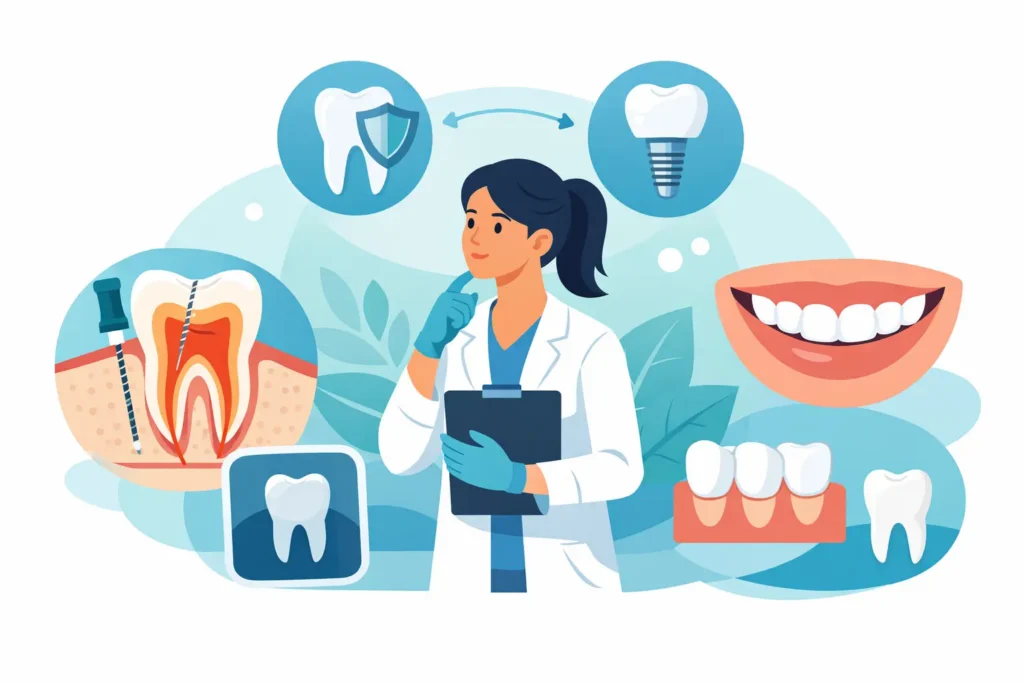
Root canal treatment is designed to retain a tooth when the pulp can no longer heal. The dentist removes infected or damaged pulp, carefully cleans the internal canals, seals them and usually restores the tooth with a protective filling or crown.
Whether this is appropriate depends on diagnosis. Persistent spontaneous pain, prolonged hot or cold sensitivity, swelling, a gum pimple, tenderness when biting, and changes visible on an X-ray can indicate a more serious problem. Yet symptoms alone do not tell the full story. Some infected teeth barely hurt, while a very painful tooth may still have a pulp that can recover.
For patients who prefer a holistic, lower-tox approach, it is reasonable to ask detailed questions about the diagnosis, materials, alternatives and likely outcomes. It is also essential to recognise that an untreated infection is not a gentle or natural option. Dental infections can progress, damage surrounding bone and sometimes require urgent care.
Root canal alternatives guide: what may be possible
A true alternative depends on whether the pulp is still healthy enough to heal. Your dentist may use clinical testing and X-rays, and occasionally refer you for further assessment, before recommending one of the following paths.
Treating decay before the pulp is permanently damaged
When decay has not reached the pulp, removing the decay and placing a carefully selected restoration may be all that is needed. In very deep cavities, a dentist may use a protective liner beneath the filling to help shield the pulp. This is not a guarantee that future root canal treatment will never be needed, but it can preserve tooth vitality where the diagnosis supports it.
Early intervention matters. A small cavity or fractured filling is often easier to treat conservatively than a tooth left until it becomes painful. Regular examinations, cleans and home care create the best opportunity to protect natural tooth structure.
Vital pulp therapy
Vital pulp therapy covers treatments intended to keep some or all of the pulp alive. Depending on the situation, this may involve indirect pulp treatment, a partial pulpotomy or a full pulpotomy. The dentist removes affected tissue, places a biocompatible protective material and seals the tooth carefully to prevent bacteria entering again.
This option is most likely to be considered when the pulp is judged to be vital and capable of healing, such as after a recent injury or in selected cases of deep decay. It can be particularly valuable for developing teeth in children and teenagers, where preserving the living pulp supports continued root development.
For an adult tooth with established infection or pulp death, vital pulp therapy may not be suitable. The quality of the seal, the extent of decay, the tooth’s ability to be restored and your follow-up care all influence the prognosis.
Monitoring a mild or uncertain issue
Short-lived sensitivity after a filling, whitening treatment or minor bite trauma can sometimes settle. If clinical findings suggest reversible inflammation rather than infection, your dentist may recommend monitoring, reducing pressure on the tooth or adjusting a high filling.
Monitoring should be active, not passive. You need to know what symptoms require a prompt review, when the tooth will be reassessed and what may happen if pain worsens. Waiting while severe pain, swelling or fever develops is not a safe treatment plan.
Extraction and replacing the tooth
If a tooth cannot be predictably restored, is severely cracked, has advanced infection, or you simply decide root canal treatment does not align with your preferences, extraction may be considered. Removing a problematic tooth can bring relief, but it is not the end of the decision.
A gap can allow neighbouring teeth to drift, affect chewing and alter the way your bite functions. Depending on the location of the tooth and your oral health, replacement options may include a dental implant, bridge or removable partial denture. In some situations, leaving a space may be reasonable, but this should be a deliberate choice made after discussing the consequences.
Extraction also carries its own considerations: healing time, preserving bone, the health of adjacent teeth, cost and the type of replacement that feels right for you. An implant can be an excellent option for some people, but it is a surgical treatment and needs sufficient bone, healthy gums and thoughtful planning.
What is not a substitute for treating infection
Many people are drawn to natural approaches because they want to care for their body gently. Nourishing food, quality sleep, stress support, careful oral hygiene and practices that help you feel grounded can all be meaningful parts of whole-body wellbeing. They may also support healing after dental treatment.
However, supplements, oils, rinses and energy-based therapies cannot remove infected pulp tissue or seal bacteria inside a tooth. Antibiotics may be needed in specific circumstances, such as spreading infection or systemic illness, but they do not replace dental treatment for the source of infection. A short-lived improvement in pain does not always mean the tooth has healed.
A holistic approach is strongest when it combines respect for your values with accurate diagnosis and timely clinical care. You deserve neither fear-based dentistry nor false reassurance.
Questions that bring clarity to your decision
Before agreeing to treatment, ask what the diagnosis is and how certain it is. Find out whether the pulp is considered healthy, reversibly inflamed, irreversibly inflamed or non-vital. Ask to see your X-ray and understand what it shows.
It can also help to ask whether the tooth can be restored securely after treatment, whether a crack is present, and what the expected outlook is for each option. If extraction is on the table, discuss whether you need to replace the tooth and the likely stages, costs and healing considerations involved.
If you feel uncertain, a second opinion is a sensible step, especially for a complex tooth, a proposed extraction or a treatment plan that does not feel fully explained. A good consultation leaves room for questions. It should help you understand the benefits, limits and trade-offs without rushing you.
Caring for the tooth and your wellbeing while you decide
If you are waiting for an assessment, avoid chewing on the painful side and choose foods that are gentle on the tooth. Keep brushing with a soft toothbrush and clean between teeth carefully, without forcing floss into a tender area. Over-the-counter pain relief may be appropriate for some people when used as directed by a pharmacist or health professional.
Seek urgent dental care for facial swelling, fever, difficulty swallowing or breathing, spreading pain, or swelling around the eye or jaw. These symptoms need prompt assessment.
The most compassionate choice is not always the same for every tooth or every person. It is the choice made with honest information, skilled clinical judgement and respect for the way you want to care for your health. When a dental decision feels overwhelming, begin with a thorough consultation and give yourself the space to choose with confidence.