A dental visit can feel very different when anxiety, a strong gag reflex, past difficult experiences or a long treatment plan are part of the picture. When considering sleep dentistry vs general anaesthetic, the most useful question is not which option is “better”. It is which level of support helps you receive necessary care calmly, safely and in a way that respects your whole wellbeing.
The terms are often used interchangeably, which can make decisions feel more confusing than they need to be. Sleep dentistry is a broad term that may describe several forms of sedation. A general anaesthetic is a specific medical state of complete unconsciousness, delivered under much tighter clinical requirements. Understanding that distinction is the first step towards making a confident choice.
What does sleep dentistry involve?
Sleep dentistry usually refers to dental treatment provided with medication that reduces fear, awareness and discomfort. Depending on the approach recommended, you may remain awake and able to respond, feel deeply relaxed and remember very little afterwards, or drift in and out of sleep.
At the lighter end, inhalation sedation uses a carefully controlled gas mixture to take the edge off anxiety. Its effects wear off quickly for many people. Oral sedation involves prescribed medication taken before treatment and can create a deeper sense of calm, although its effects can be less predictable from person to person.
IV sedation is often what people mean when they say they want to be “asleep” for dentistry. Sedation medication is administered through a small cannula and adjusted throughout the appointment by an appropriately qualified clinician. Many patients become very drowsy, have little recollection of the visit and feel that treatment passed quickly. However, they are not necessarily unconscious in the same way as they would be under a general anaesthetic.
Throughout sedation, the dental team monitors you closely. You will still need a responsible adult to take you home and stay with you as advised, because judgement, coordination and memory can remain affected for the rest of the day. Driving, returning to work, drinking alcohol and making important decisions should wait until you have fully recovered.
How a general anaesthetic differs
A general anaesthetic makes you fully unconscious. You are not aware of treatment, do not respond normally to verbal instructions and require advanced monitoring and management of your breathing and vital signs. For dental treatment, this is generally provided by a specialist anaesthetist in a hospital or accredited day surgery setting, rather than a standard dental clinic room.
Because general anaesthesia is more intensive, it involves more planning. You may need pre-operative assessment, fasting instructions, medical clearance and specific arrangements for recovery and transport. The recovery period can also be more substantial. Drowsiness, nausea, a sore throat or grogginess can occur, and some people need more time before they feel fully like themselves.
That does not make a general anaesthetic a poor choice. For the right patient and procedure, it can be the kindest, most practical pathway. It simply has a different clinical profile, setting and recovery commitment from sedation.
Sleep dentistry vs general anaesthetic: the practical differences
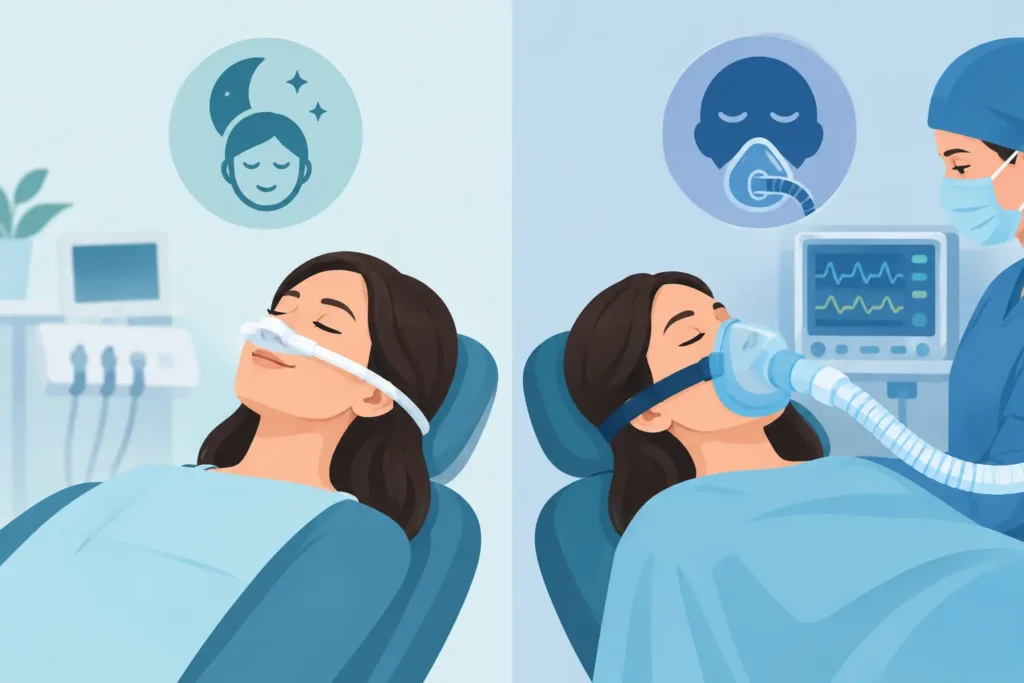
The biggest difference is your level of consciousness. With most forms of sleep dentistry, you are sedated but retain some protective responses and may be able to cooperate if needed. With a general anaesthetic, you are completely unconscious and your airway requires dedicated anaesthetic management.
The treatment setting also differs. Sedation may be suitable for care in a dental practice when the patient, procedure and clinician’s credentials allow. General anaesthesia requires a hospital or licensed day surgery environment and an anaesthetist.
Cost can be another consideration. A general anaesthetic usually has additional facility, theatre and anaesthetist fees, alongside the dental treatment itself. Sedation also involves an additional cost, but may be less complex depending on the type used. Your treatment plan should set out expected fees clearly, so you can make a decision without surprises.
Recovery is typically faster after lighter sedation, while deeper IV sedation and general anaesthesia both require a protected day at home. Neither is a shortcut around aftercare. If you have had surgical treatment, you will still need to follow instructions for pain relief, eating, rest and oral hygiene.
When sedation may be a thoughtful choice
Sleep dentistry can be particularly helpful for people who avoid care because of dental fear, feel overwhelmed by sounds or sensations, or find it difficult to keep their mouth open for a longer appointment. It may also be considered for a pronounced gag reflex, complex procedures completed over several hours, or patients who need help settling into treatment after a distressing past experience.
For many anxious adults, sedation creates enough distance from the experience to make treatment manageable while avoiding the greater intensity of general anaesthesia. It can support a gentler relationship with dental care, especially when combined with a calm environment, clear consent, breaks when needed and a team that listens without judgement.
Sedation is not automatically appropriate just because someone feels nervous. Your medical history, current medications, sleep quality, alcohol or recreational drug use, breathing conditions and the nature of treatment all matter. Obstructive sleep apnoea, for example, may affect the safest approach to sedation and recovery. Honest pre-treatment information is essential, never something to minimise out of embarrassment.
When general anaesthetic may be recommended
General anaesthesia may be considered where treatment cannot be completed safely or humanely with local anaesthetic and sedation alone. This can include extensive surgical dental treatment, severe dental phobia that prevents cooperation despite other support, particular physical or developmental needs, or certain complex children’s cases.
For a child with multiple urgent dental needs, completing care under general anaesthesia may sometimes prevent repeated frightening visits. Yet it is never a one-size-fits-all answer. The child’s age, health, level of cooperation, treatment needs and the availability of other approaches must all be carefully assessed with their parent or guardian.
Some patients assume that general anaesthesia is inherently safer because they will be fully asleep. Others assume sedation must always be safer because it is less intensive. Neither belief tells the whole story. The safest option is the one selected after a proper assessment, delivered by suitably trained professionals in the right setting, with the appropriate monitoring and emergency capability.
Comfort begins before any medication
Medication is only one part of a supported dental experience. A considered appointment should begin with time to discuss what has made dentistry difficult for you, what sensations you worry about and what helps you feel in control. You may prefer a detailed explanation before each step, a hand signal for a pause, a quieter appointment time or the certainty of a staged treatment plan.
At Dental + Skin Clinic, this conversation can also include your preferences around materials and a lower-tox, whole-body approach to care. These values do not replace clinical safety protocols. They help ensure your treatment feels aligned with your priorities, whether you are planning restorative work, cosmetic treatment or essential care after avoiding the dentist for years.
Local anaesthetic is still used to numb the teeth and gums for most procedures, even when sedation or general anaesthesia is involved. This supports comfort during treatment and as the sedative effects begin to wear off. If you have had a previous reaction, difficult numbing experience or concern about any medication, raise it early so your clinician can investigate and plan appropriately.
Questions worth asking at your consultation
A useful consultation should leave you clear on what is being proposed and why. Ask what type of sedation is recommended, who will provide and monitor it, where treatment will take place and what alternatives are available. It is also reasonable to ask about fasting, medications to stop or continue, transport home, likely recovery time and the full expected costs.
If general anaesthesia is being considered, ask why sedation is not suitable for your particular situation. If sedation is recommended, ask what level of awareness you can expect and what would happen if treatment becomes more complex than planned. There is no need to rush this conversation. Informed consent means having space to understand the benefits, limitations and possible risks in terms that make sense to you.
The right choice should leave you feeling supported rather than pressured. A calm consultation can turn a daunting treatment plan into a practical next step, helping you care for your smile in a way that feels safe, considered and genuinely your own.