A cracked tooth can make a morning coffee feel like a gamble. A missing tooth can change the way you chew, speak or smile in photos. When comparing a crown vs bridge, the right choice is rarely about choosing the ‘best’ restoration in general. It is about understanding what your teeth, gums, bite, health preferences and future smile need from this point forward.
At Dental + Skin Clinic, we see restorative dentistry as a chance to bring comfort, function and confidence back into harmony. That begins with a thoughtful conversation, not a one-size-fits-all recommendation.
Crown vs bridge: the key difference
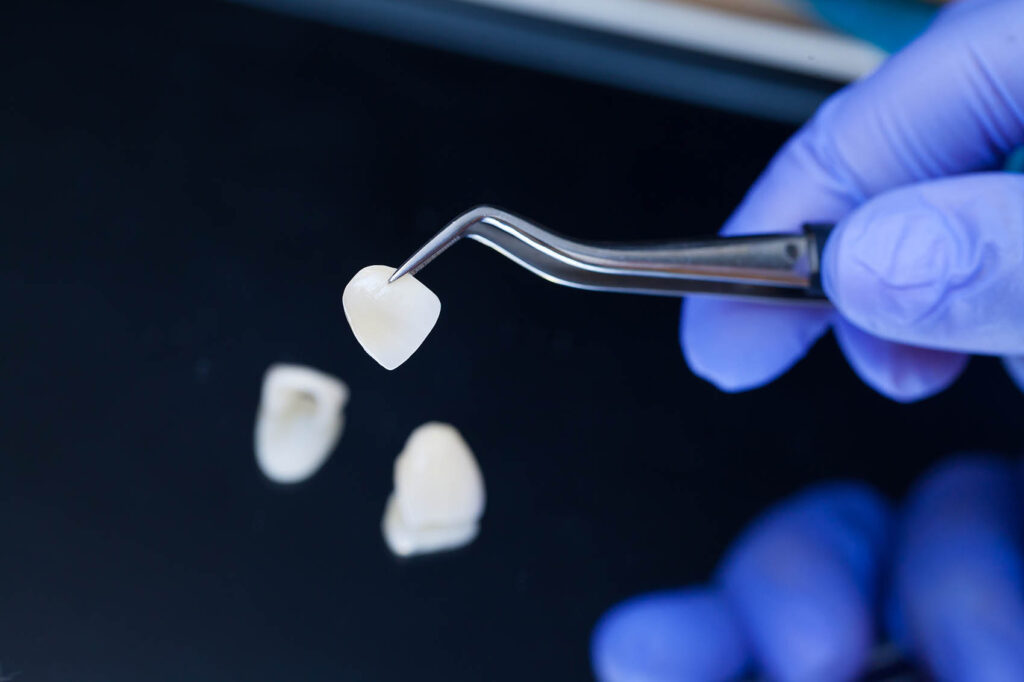
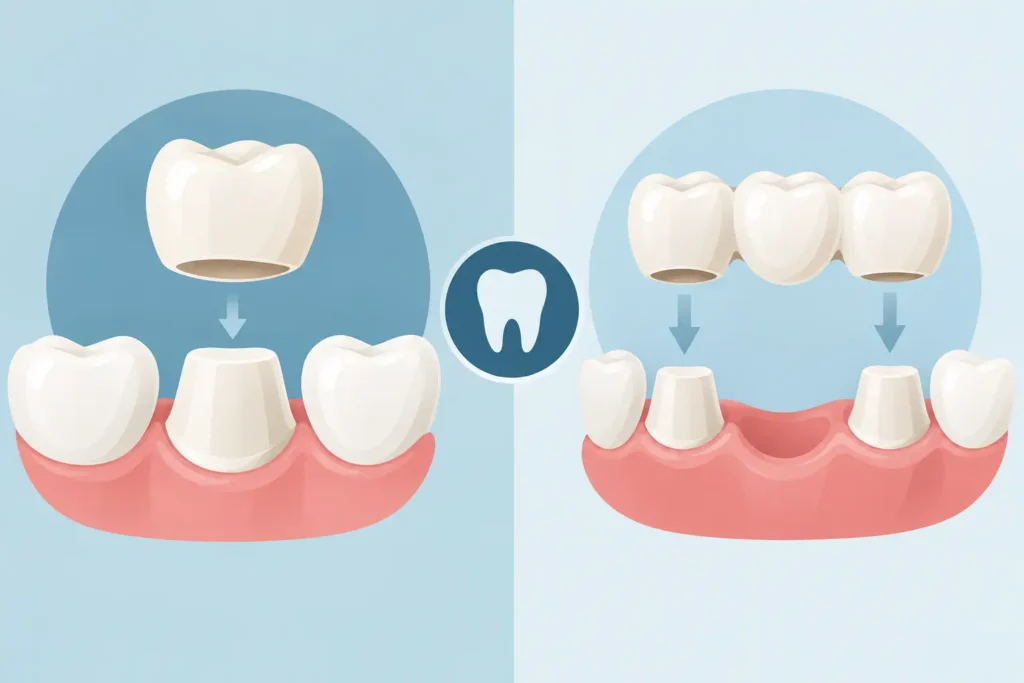
A dental crown restores and protects a tooth that is still present. It is a custom-made cover that fits over the visible portion of a tooth, returning its shape, strength and appearance. Think of it as a protective outer layer for a tooth that has been weakened but can still be retained.
A dental bridge replaces one or more missing teeth. A conventional bridge uses the teeth on either side of the gap as supports, with a replacement tooth, known as a pontic, sitting between them. Once fitted, it is fixed in place and cannot be removed at home.
Both options are made to look natural and feel stable. The fundamental question is simple: are we rebuilding a tooth, or replacing a tooth that is no longer there?
When a crown may be the gentler choice
A crown may be recommended when a tooth has lost a significant amount of its natural structure. This can happen after a large filling breaks down, following decay, after trauma, or when a tooth develops a crack. In some cases, crowns are also used to improve the form or colour of a tooth where a veneer is not suitable.
The purpose is not merely cosmetic. A well-designed crown can distribute biting forces more evenly and help protect the remaining tooth from further fracture. This matters particularly for back teeth, which manage a great deal of pressure when you chew.
However, a crown is not automatically the first answer for every damaged tooth. If enough healthy enamel remains, a smaller restoration may be more conservative. Your dentist will assess the amount of sound tooth structure, whether the crack extends below the gumline, the condition of the nerve, and how your bite meets when you close your teeth.
Crown materials can also be chosen with both aesthetics and practical function in mind. Modern ceramic options can offer beautiful translucency for front teeth, while high-strength ceramics may be considered for teeth that take heavier chewing forces. For patients seeking a lower-tox, more personalised approach, it is worth discussing material options, sensitivities and the clinical requirements of the area being treated.
What a crown appointment usually involves
The tooth is carefully shaped to create room for the crown, then a detailed scan or impression is taken. A temporary crown may protect the tooth while the final restoration is being made. At the fitting appointment, your dentist checks the shade, shape, contact points and bite before securing the crown.
It should feel like your own tooth, not bulky or foreign. Some short-term sensitivity can occur after preparation, but ongoing pain, pressure when biting or a feeling that the crown is too high should always be reviewed.
When a bridge may make sense
A missing tooth is not always just a visual concern. Over time, neighbouring teeth can drift towards the space, and the opposing tooth may move down or up in search of contact. This can affect the bite and make cleaning more difficult. Replacing a missing tooth may support chewing comfort and help preserve the balance of your smile.
A conventional bridge can be an appropriate option when the teeth on either side of the gap already need crowns, such as when they have large existing restorations or are substantially worn. Rather than treating each support tooth separately, the bridge can restore the entire space as one carefully planned piece.
A bridge can also be a worthwhile choice for people who would prefer not to undergo implant surgery, or where implant treatment is not clinically suitable. The procedure is generally completed over fewer stages than an implant-supported tooth replacement, although the exact timeline depends on your oral health and the type of bridge selected.
There are alternatives within the bridge category. A resin-bonded bridge, sometimes called a Maryland bridge, may be used in selected cases, often near the front of the mouth. It is attached with a discreet wing to the back of a neighbouring tooth and can require less preparation. It is not ideal for every bite or every missing tooth, particularly in areas exposed to strong chewing pressure.
The trade-off with conventional bridges
The main consideration is that a conventional bridge usually requires shaping the adjacent teeth. If those teeth are perfectly healthy and untouched, an implant-supported replacement may be worth discussing as a way to avoid preparing them. On the other hand, if the neighbouring teeth already need protection, a bridge may be a very practical and elegant solution.
A bridge does not replace the missing tooth root. This means the jawbone beneath the gap is not stimulated in the same way it is with a natural tooth or an implant. Bone changes do not make a bridge unsuitable, but they are part of the longer-term picture your dentist should explain clearly.
Appearance, feel and everyday care
With high-quality planning and materials, crowns and bridges can be designed to blend beautifully with surrounding teeth. Colour matching involves more than picking a single shade. The dentist considers natural variation, translucency, surface texture and the way light reflects across your smile.
In daily life, a crown is cleaned much like a natural tooth: gentle brushing twice a day, cleaning between teeth, and regular professional checks. The gumline around a crown deserves special attention, because plaque can still collect where the restoration meets the tooth.
A bridge needs a little more technique. You still brush normally, but you also need to clean beneath the replacement tooth. Special floss threaders, super floss or an interdental brush can help remove plaque from this space. Your dentist or hygienist can show you a method that feels easy enough to maintain at home. The best restoration is one you can care for consistently.
Neither treatment is immune to decay or gum disease. The tooth beneath a crown, and the supporting teeth beneath a bridge, remain vulnerable if plaque builds up. A calm, preventative routine protects your investment and supports your whole-body wellbeing too.
Cost is only one part of the decision
It is understandable to ask about cost early. A crown and a bridge involve different laboratory work, clinical time and levels of complexity. A bridge usually costs more than a single crown because it replaces multiple tooth units, but the most appropriate treatment should not be decided on price alone.
The real value lies in how the restoration fits into your longer-term oral health. A lower initial cost can become less economical if it compromises healthy teeth, fails to manage an unstable bite, or does not allow you to clean effectively. During your consultation, ask for a clear treatment plan that explains the recommended option, alternatives, anticipated maintenance and payment choices.
Private health cover may contribute depending on your policy and annual limits. If treatment feels financially daunting, flexible payment plans can make it easier to move ahead without rushing a decision that deserves care.
Questions worth bringing to your consultation
You do not need to arrive knowing the answer. A good consultation should leave you more informed and more at ease. Ask whether the affected tooth can be preserved, how much healthy tooth structure needs to be altered, what materials are suitable for your bite, and how the restoration will be maintained over time.
It is also reasonable to share preferences about materials, dental anxiety, past treatment experiences and your broader health priorities. For some people, a calm environment, clear explanations and a more holistic lens are just as meaningful as the technical details. Your comfort is not separate from good dentistry. It is part of it.
A crown or bridge can be a beautiful step towards feeling comfortable in your smile again. The most supportive next step is a personalised assessment that respects the strength of your teeth, the health of your gums and the kind of care that feels right for you.