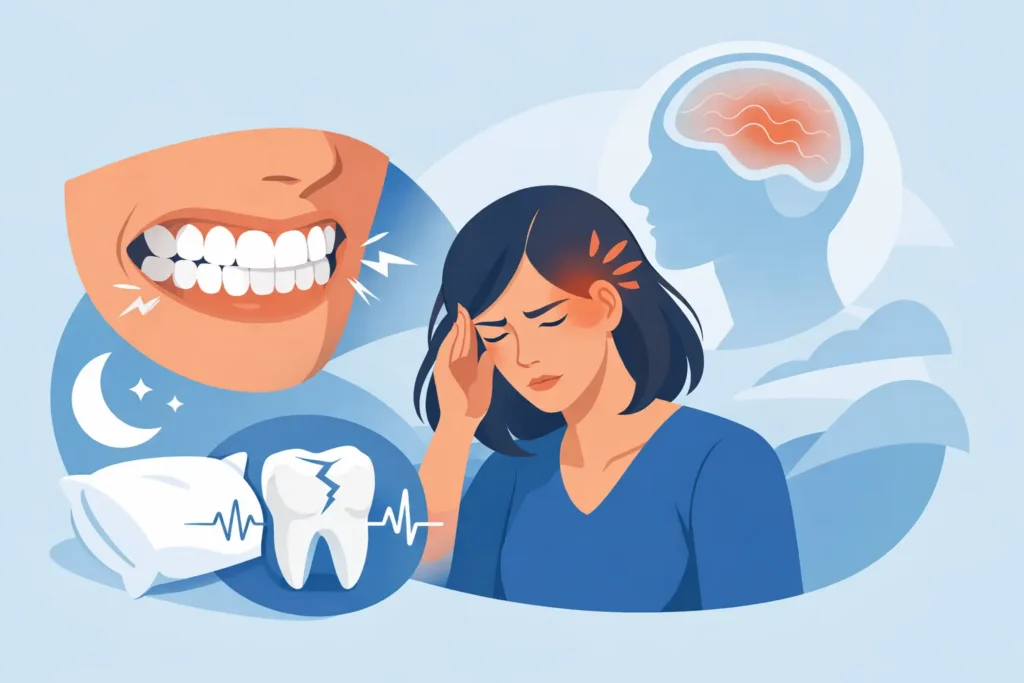
Waking with a dull ache at your temples, a tight jaw or a headache that seems to arrive before your day has properly begun can feel deeply draining. So, can teeth grinding cause headaches? Yes. Clenching or grinding your teeth, often without realising it, can overload the jaw muscles and joints, creating pain that may travel into the temples, forehead, face, neck and shoulders.
For many people, the headache is the symptom they notice first. The underlying jaw tension may be quietly building during sleep, while concentrating at work, driving through Melbourne traffic, exercising or moving through a stressful season of life. A personalised dental assessment can help separate teeth grinding from the many other possible causes of recurring headaches.
How teeth grinding can lead to headaches
Teeth grinding, clinically known as bruxism, involves pressing the teeth together or moving them against each other with more force than the mouth is designed to handle. This can happen during sleep, which is called sleep bruxism, or while awake, known as awake bruxism.
The muscles that close your jaw are remarkably strong. When they stay contracted for long periods, they can become fatigued and tender. The temporalis muscles sit at the sides of the head near the temples, while the masseter muscles sit at the angles of the jaw. When these areas are overworked, they can refer pain upwards and outwards, producing a tension-like headache or a sore, heavy feeling around the face.
Grinding can also irritate the temporomandibular joints, or TMJ, which connect the lower jaw to the skull. If these joints and their surrounding muscles are under strain, you might notice clicking, limited opening, pain when chewing, ear-area discomfort or headaches that worsen after waking. Not every person who grinds develops TMJ symptoms, and not every headache comes from the jaw. The pattern matters.
Signs your headaches may be linked to grinding
A headache related to bruxism often has clues beyond head pain alone. You may wake with a tight or tired jaw, notice tenderness when pressing your temples or cheeks, or find that your teeth feel sensitive without an obvious dental cause. A partner may hear grinding overnight, although many people clench silently.
Other signs can include worn, flattened or chipped teeth, small cracks, a changed bite, tongue indentations and tension through the neck and shoulders. Some people find their headaches improve as the day goes on, while others notice pain after intense concentration or emotional stress. Clenching at a desk, during workouts or while scrolling on a mobile is more common than most people expect.
Headache location alone cannot confirm the cause. Migraine, sinus concerns, dehydration, vision changes, hormonal shifts, sleep disruption and medication effects can all play a part. This is why a thoughtful assessment should look at your teeth, bite, jaw movement, lifestyle and overall wellbeing rather than treating a headache as a standalone problem.
Why sleep can make the pattern worse
Sleep bruxism is not simply a habit you can switch off. It can be associated with stress, disrupted sleep, alcohol, caffeine, certain medicines and breathing-related sleep concerns. Sometimes it occurs in short bursts that you will never remember.
If you wake unrefreshed, snore, gasp, feel unusually sleepy during the day or have persistent morning headaches, it is worth discussing these symptoms with an appropriate health professional as well as your dentist. A mouthguard can protect teeth from grinding forces, but it does not automatically address every driver of sleep disturbance. The best care is responsive to the whole picture.
Can teeth grinding cause headaches every day?
It can, particularly when clenching is frequent or the jaw has not had a chance to recover. Daily headaches are not something to simply push through with pain relief. Ongoing tension can affect sleep quality, concentration, mood and the comfort of everyday things such as chewing, talking and yawning.
That said, the relationship is not always straightforward. Some people have significant tooth wear and no headaches. Others have jaw pain and headaches even with very little visible wear, especially if they clench rather than grind. A dentist can look for subtle signs, but your experience of pain is equally valuable. Keeping a simple note of when headaches appear, what you were doing beforehand, sleep quality and jaw symptoms can reveal a useful pattern.
A gentler, personalised way to manage jaw tension
The right approach depends on what is placing pressure on your jaw. It may involve protecting the teeth, reducing muscle strain, improving daily awareness or coordinating care with other health practitioners where needed. There is no one-size-fits-all appliance or solution.
A custom-fitted mouthguard is often an important starting point for night-time grinding. Unlike a generic guard, a professionally designed appliance is made to fit your teeth and bite precisely. Its role is primarily protective: it creates a barrier between the upper and lower teeth and can help distribute forces more evenly. It should feel comfortable and be reviewed regularly, particularly if your bite or symptoms change.
During the day, a helpful resting position is simple: lips together gently, teeth apart, and the tongue relaxed against the roof of the mouth. Your teeth do not need to touch when you are not chewing or swallowing. Small reminders on your screen or a few slow breaths before stressful tasks can interrupt unconscious clenching without adding another demanding task to your day.
Warmth over the jaw muscles, gentle massage and conscious relaxation can soothe temporary muscular tension. Choose softer foods for a short period if chewing is painful, and avoid testing a sore jaw with gum, chewy lollies or wide bites. If neck tension is part of the picture, supportive posture, movement and guidance from an appropriate practitioner may also be useful.
At Dental + Skin Clinic, we take a holistic view of bruxism and headache concerns. That means considering clinical dental findings alongside sleep, stress, emotional wellbeing and the way your body is holding tension. Your care can be shaped around your comfort, preferences and long-term oral health, with a calm conversation about what feels achievable for you.
When a headache needs urgent medical attention
While jaw-related headaches are common, sudden or severe head pain should never be assumed to be from grinding. Seek urgent medical care for a sudden, explosive headache, headache after a significant head injury, or pain accompanied by fainting, confusion, weakness, numbness, trouble speaking, vision changes, fever, a stiff neck or persistent vomiting.
Arrange a prompt review with your GP if headaches are new, changing, frequent, worsening or affecting your daily life. This is especially important if you are relying on pain medicines often, as frequent use can sometimes contribute to rebound headaches. Your dentist and GP can play different but complementary roles in finding the cause.
What to expect at a dental assessment
A careful assessment begins with listening. You may be asked about the timing and nature of your headaches, sleep, stress, medications, jaw noises, chewing comfort and previous dental work. Your dentist can then examine tooth wear, cracks, gum health, jaw muscles, joint movement and how your teeth meet.
From there, recommendations may range from a custom mouthguard and monitoring plan to practical strategies for daytime clenching. If signs point beyond the mouth, you may be encouraged to speak with your GP, a sleep professional or another allied health practitioner. That broader perspective protects against oversimplifying a symptom that may have several contributors.
You deserve more than a quick fix for recurring headaches. When your jaw is given the attention it needs, relief can begin with a clearer understanding of what your body has been trying to communicate – and a care plan that brings more ease to your sleep, smile and everyday life.