A filling may be small, but the material chosen can feel like a very personal decision. When considering composite fillings vs amalgam, many Melbourne patients are weighing more than the repair itself. They want a restoration that protects the tooth, looks natural and feels aligned with their preferences around lower-tox, whole-body care.
There is no single material that suits every tooth, every cavity or every person. The best choice depends on where the filling is needed, how much healthy tooth remains, your bite forces, your aesthetic goals and your comfort with the materials involved. A thoughtful conversation can turn a routine treatment into care that feels calm, clear and genuinely personalised.
What is amalgam?
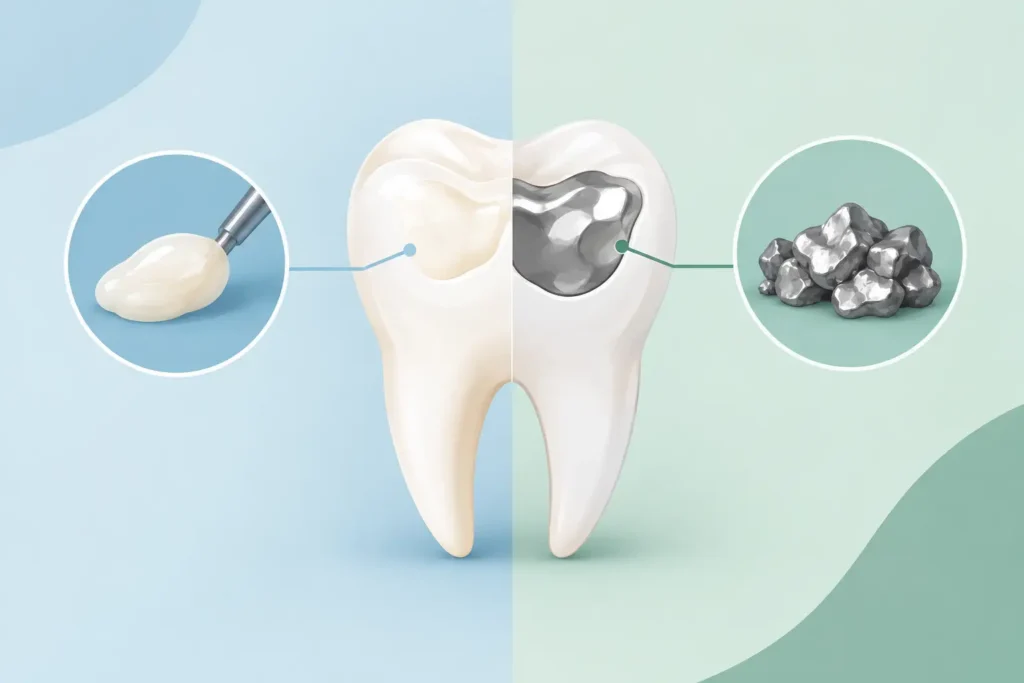
Dental amalgam is a silver-coloured filling material that has been used for well over a century. It is made from a blend of metals, including liquid mercury combined with silver, tin and copper. Once placed, it hardens into a durable restoration that can withstand strong chewing forces.
Amalgam is generally less expensive than many tooth-coloured alternatives and has a long clinical history, particularly for large fillings in back teeth. Its metallic appearance, however, can be noticeable when you laugh or speak. It also does not bond directly to the tooth in the same way a composite material does, which can mean more healthy tooth structure is removed to create a shape that holds the filling in place.
For patients who are concerned about mercury exposure or who want a more natural-looking restoration, amalgam may not feel like the right fit. These concerns deserve a respectful conversation, not dismissal.
What are composite fillings?
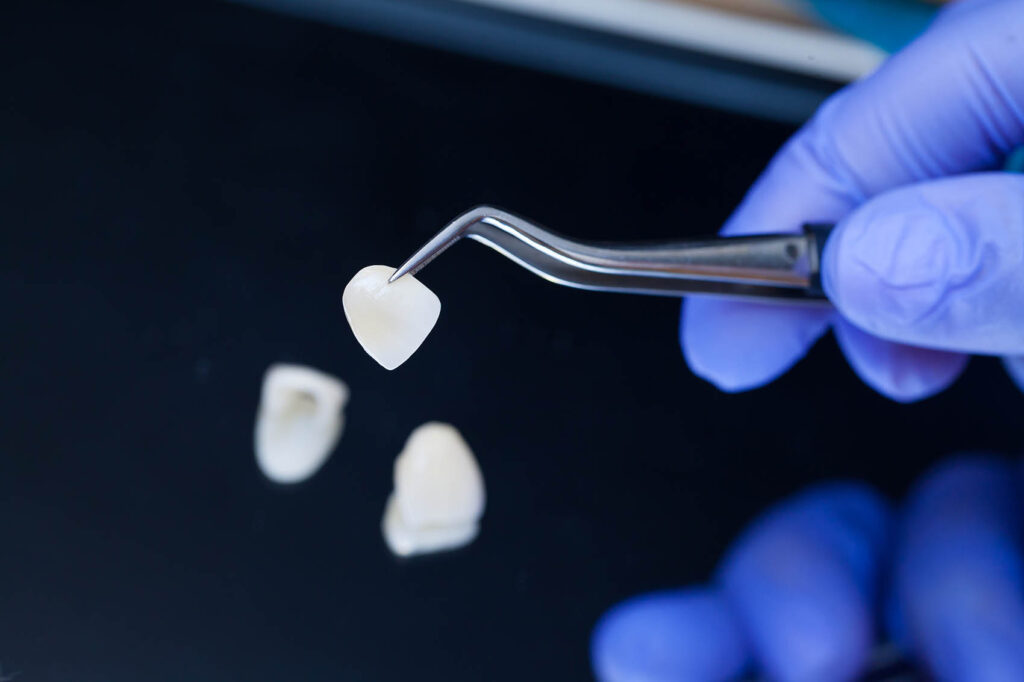
Composite fillings are tooth-coloured restorations made from a resin material blended with fine glass or ceramic-like particles. Your dentist shades the composite to sit harmoniously with the surrounding enamel, making it a popular option for visible front teeth as well as many back teeth.
Unlike amalgam, composite is bonded to the tooth. This often allows for a more conservative preparation, with the focus on preserving as much healthy structure as practical. The material is placed in layers and set with a curing light, then shaped and polished to support a comfortable bite and a natural appearance.
At Dental + Skin Clinic, we take a low-tox, individualised approach to restorative care and can discuss BPA-free composite options where appropriate. Material selection is part of the wider picture: supporting your oral health, confidence and sense of ease in the dental chair.
Composite fillings vs amalgam: the differences that matter
Appearance and confidence
This is often the clearest distinction. Amalgam has a dark silver-grey finish that can become more noticeable over time. Composite can be colour-matched to your natural teeth, helping a repaired tooth blend into your smile.
For a filling near the front of the mouth, composite is commonly the preferred aesthetic choice. In back teeth, appearance may still matter to patients who want to smile freely without a metallic filling showing when they laugh.
Tooth preservation
Composite bonds to enamel and dentine, which can help support a conservative approach to preparing the tooth. Amalgam does not adhere in the same way, so the dentist may need to create mechanical retention within the tooth to keep it secure.
That does not mean every composite filling is automatically smaller or better for every cavity. A very large area of decay or a weakened cusp may need a different restoration, such as an onlay or crown, to give the tooth longer-term protection. The right choice should be based on the tooth’s remaining strength, not just the filling material.
Durability and bite forces
Amalgam has a strong track record in high-pressure areas of the mouth. Modern composite materials are also highly durable and can perform beautifully when they are carefully placed, moisture is controlled and the restoration is suited to the size and position of the cavity.
Composite may be more vulnerable to wear, chipping or staining over time, particularly for people who clench or grind their teeth. A night guard can be a valuable protective option if grinding is placing pressure on your fillings, natural teeth and jaw.
A small composite filling can last many years with attentive home care and regular dental reviews. But no filling lasts forever. Diet, oral hygiene, bite patterns, the size of the restoration and the health of the tooth all influence longevity.
Sensitivity and comfort
Some people experience short-term sensitivity after any filling, especially if the cavity was deep or close to the nerve. Composite is placed in layers and can be selected with sensitivity management in mind, although the response of each tooth is individual.
Amalgam and composite also react differently to temperature. Metal conducts heat and cold more readily, while composite is less thermally conductive. This may be relevant for teeth that are already sensitive, though it is only one factor your dentist will assess.
Cost and appointment time
Composite fillings can cost more than amalgam because the placement technique is more detailed and often takes longer. The tooth must be kept dry during bonding, and the material is built up and shaped with care to create a comfortable bite.
Cost should be transparent, but it should not be the only measure of value. Choosing a filling involves considering how the restoration will look, how it will function, how much tooth structure can be retained and whether it feels right for your health preferences.
A note on existing amalgam fillings
If you already have amalgam fillings that are comfortable, intact and not showing signs of decay, cracking or leakage, replacement may not be immediately necessary. Removing a stable filling also involves drilling the tooth, so this decision should be made thoughtfully rather than from fear.
There are good reasons to assess an older amalgam restoration, including recurrent decay around the edges, a fractured tooth, a failing filling, changes in appearance or a desire to discuss lower-tox material options. Your dentist can examine the tooth, take any necessary images and explain whether monitoring, repair or replacement is most appropriate.
If replacement is chosen, the process should be planned carefully. Ask how your clinician manages comfort, isolation, suction and the restorative material being used. You deserve to understand each step and to feel supported throughout the appointment.
When composite may be a beautiful choice
Composite is often well suited to small or moderate cavities, particularly when a discreet, tooth-coloured result is important. It can also be used to repair chips, replace older visible fillings and restore areas where conserving natural enamel is a priority.
It may be especially appealing if you prefer a metal-free appearance or are seeking a material conversation that considers your wider wellbeing preferences. For children and adults alike, the goal is not simply to fill a hole. It is to restore function while helping the tooth feel and look like itself again.
When another restoration may be wiser
A large cavity, extensive old filling, cracked cusp or tooth weakened by decay may need more coverage than a direct composite filling can provide. In these situations, an onlay or crown may better distribute chewing forces and reduce the risk of a future fracture.
This is where personalised dentistry matters. A premium-looking restoration is not necessarily the healthiest long-term choice if the underlying tooth needs greater support. Your dentist should explain the trade-offs in straightforward language and give you room to consider your options.
Choosing with clarity, not pressure
The most reassuring dental decisions are made with good information and no rush. During a consultation, your dentist can assess the cavity, your bite, any sensitivity, your smile goals and the materials you feel comfortable receiving. If dental anxiety has made it difficult to seek care, gentle communication and comfort-focused options can make the process feel far more manageable.
Your mouth is part of your whole wellbeing, and the right filling should support both practical oral health and peace of mind. Whether you choose composite, retain a sound amalgam filling or need a more protective restoration, allow the decision to be guided by the needs of your tooth and the care values that help you feel at home in your smile.