A missing tooth can change more than the way a smile looks in photos. It can affect how comfortably you chew, how clearly you speak and how confident you feel when you laugh. When weighing up a dental implant vs denture, the best choice is rarely about choosing the most advertised option. It is about finding a replacement that suits your mouth, your lifestyle, your priorities and the way you want to feel every day.
For some people, that means the stability of an implant. For others, a carefully designed denture offers a practical, lower-commitment path. Gentle, personalised planning matters because tooth replacement is not one-size-fits-all dentistry.
Dental implant vs denture: the key difference
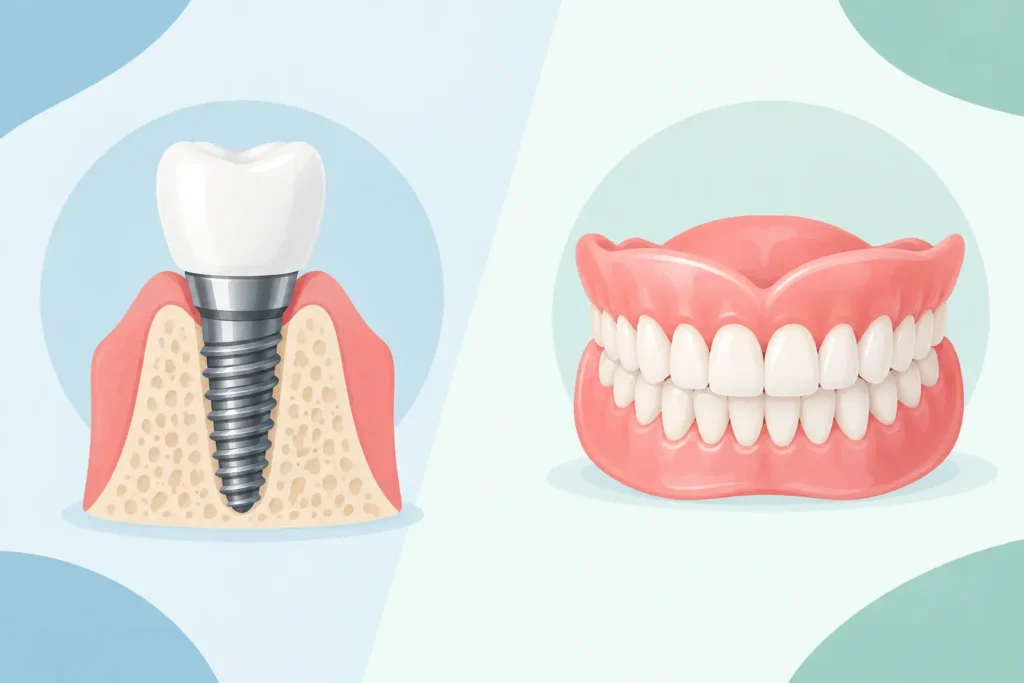
A dental implant replaces the root of a missing tooth as well as the visible part. A small titanium fixture is placed into the jawbone, then allowed time to integrate with the bone. Once healing is complete, a custom crown, bridge or full-arch restoration is attached above the gumline.
A denture is a removable appliance that replaces one or more missing teeth. Partial dentures sit around remaining natural teeth, while full dentures rest on the gums where all teeth are missing. Modern dentures can be natural-looking, comfortable and beautifully crafted, but they rely on the shape of the gums and jaw for retention rather than being fixed into the bone.
That distinction shapes almost every practical consideration: how each option feels, how it is maintained, how treatment is planned and how it may support your oral health over time.
When a dental implant may feel like the right fit
Many people are drawn to implants because they are fixed in place. Once restored, an implant crown is intended to look and function much like a natural tooth. There is no need to remove it at night, and it does not cover the palate in the way some upper dentures do.
Implants can also help preserve jawbone in the area where a tooth has been lost. After extraction, the bone that once supported the tooth can gradually reduce in volume. Because an implant transfers chewing forces into the jaw, it may help maintain bone in that local area. This can be particularly valuable when replacing a single tooth, or when planning a more comprehensive smile restoration.
From a day-to-day perspective, an implant may offer greater confidence with firmer foods and clearer speech. It can also prevent nearby teeth from drifting into the gap. For people who dislike the thought of removing an appliance, this fixed option can feel emotionally easier and more familiar.
However, implants involve surgery and a healing period. Treatment can take several months, particularly if tooth removal, gum therapy or bone grafting is needed first. Good oral hygiene and regular reviews are essential, as implants can still develop inflammation around the gum and bone if plaque is not managed carefully.
An implant is not automatically suitable for every person. Jawbone volume, gum health, bite forces, medical history, smoking or vaping, medication use and clenching patterns all need thoughtful assessment. A calm, honest consultation should explore these factors before any decision is made.
Implant treatment is a process, not a quick fix
While same-day teeth may be possible in selected cases, a beautiful long-term result should never be rushed simply for convenience. The gum line, bite, facial support and overall health of the mouth all influence the final result. A carefully paced plan gives the tissues time to settle and allows your dentist to design a restoration that feels balanced, natural and comfortable.
When dentures can be the better choice
Dentures remain a valuable solution, especially for people replacing several teeth or an entire arch. They can restore the appearance of a smile, offer support to the lips and cheeks, and improve chewing compared with leaving spaces untreated.
A denture may be appropriate when surgery is not desired, when implant treatment is not clinically suitable, or when someone wants a more accessible initial investment. Dentures can also be made relatively quickly after extractions as an immediate temporary option, helping you avoid a period without teeth while the gums heal.
For full-mouth tooth loss, dentures can be a gentle starting point while you consider future options. Some people remain very happy with conventional dentures. Others choose to use dentures first, then later secure a denture with implants for greater stability.
The trade-off is that dentures can move slightly during eating or speaking, especially as the jawbone and gum shape change over time. They need to be removed for cleaning, and full dentures are generally taken out overnight to let the gums rest. Adjustments, relines and eventual replacement are normal parts of denture care.
A well-made denture should not feel like an afterthought. The shade, shape and arrangement of the teeth can be designed to complement your features and create a smile that feels like you, not a generic set of teeth.
Comfort, eating and confidence
Comfort is deeply personal. A patient who wants the closest experience to having natural teeth may prefer implants, while another may feel more comfortable avoiding surgery and choosing a removable denture.
With an implant-supported crown or bridge, chewing generally feels more stable because the restoration is anchored to the jaw. With dentures, softer foods are often easier at first, and adapting to firmer or stickier foods may take patience. Denture adhesive can improve retention for some people, but it is not a substitute for a denture that fits properly.
Confidence matters too. If you are worried about a denture moving at a dinner, presentation or family event, implant support may offer welcome reassurance. On the other hand, confidence can also come from choosing treatment that feels aligned with your comfort level, budget and health preferences. There is no prize for choosing the more complex path if it does not feel right for you.
Care requirements and whole-mouth health
Both options need ongoing care. An implant crown cannot decay, but the gums and bone around it need meticulous cleaning. Brushing twice daily, cleaning between teeth or around the implant, professional maintenance and bite checks all help protect the investment.
Dentures should be cleaned daily with a soft denture brush and suitable cleanser, then stored safely when not worn. They should not be cleaned with toothpaste, which can be abrasive. Your gums, tongue and any remaining natural teeth still need gentle daily care and regular dental reviews.
The health of your remaining teeth is central to the decision. If a partial denture places pressure on vulnerable teeth, or if gum disease needs attention, these issues should be stabilised first. A holistic approach considers not only the gap in your smile but also your bite, breathing, jaw comfort, nutrition, stress and ability to maintain the result.
Cost and value: looking beyond the upfront figure
Dentures usually have a lower upfront cost than implants. Implant treatment involves diagnostic imaging, surgical placement, restorative components and carefully planned follow-up, so the initial investment is typically greater.
Yet value is not simply the first number on a treatment plan. A denture may require future relines, repairs or replacement as the mouth changes. Implant restorations also need long-term maintenance and may need repair or replacement over the years. The most useful question is: what option supports your health, comfort and confidence in a way that is sustainable for you?
A staged plan can sometimes make treatment more manageable. For example, you may begin with a removable solution while healing, then explore implant support when the timing feels right. Discussing payment options and treatment phases openly can remove pressure and help you make a considered decision.
Choosing with clarity, not pressure
The best dental implant vs denture decision begins with a comprehensive conversation. Your dentist should assess your gums, bone, bite and remaining teeth, then listen to what matters most to you. That might be a fixed solution, a lower-tox material preference, avoiding surgery, rebuilding confidence after tooth loss or simply being able to enjoy meals without worry.
At Dental + Skin Clinic, we believe a tooth replacement plan should feel calm, considered and respectful of the whole person. You deserve clear information, gentle care and space to ask every question.
A missing tooth does not have to dictate how you eat, speak or show up in the world. Give yourself permission to choose the option that supports not only your smile, but your sense of ease in it.