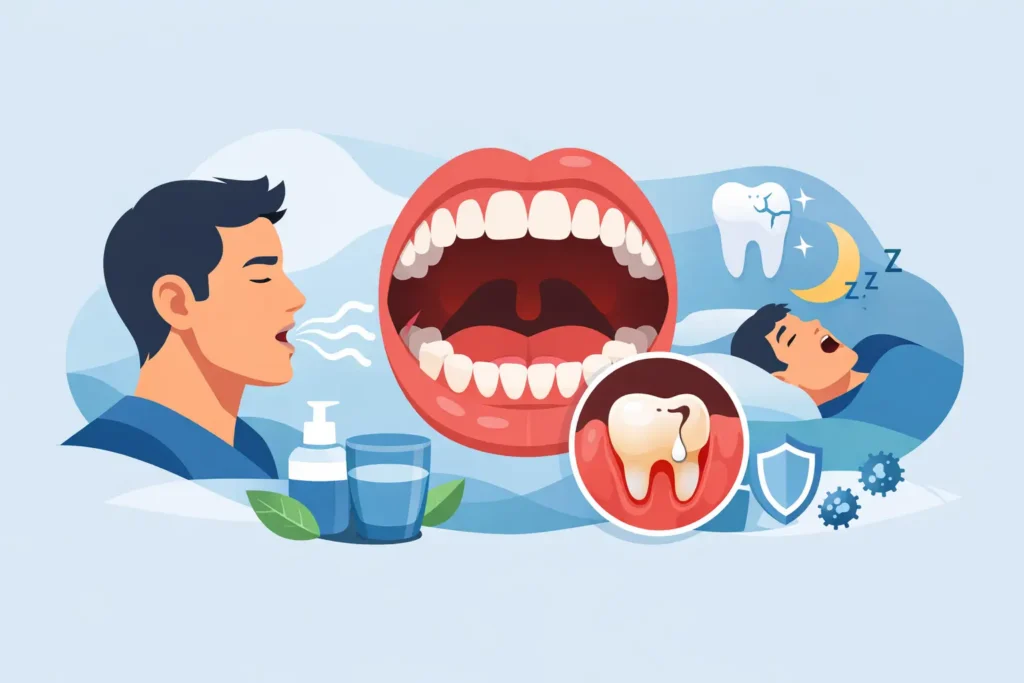
Waking with a dry, sticky mouth, thirsty enough to reach for water before coffee, can feel like a small inconvenience. Yet when it happens often, it may be a sign that your breathing pattern deserves attention. Mouth breathing and oral health are closely connected because saliva, nasal airflow and quality sleep all help create a healthier environment for your teeth, gums and body.
Occasional mouth breathing during a cold or hay fever flare-up is common. Persistent mouth breathing is different. It can leave the mouth dry overnight, influence the balance of oral bacteria, aggravate gum concerns and sometimes point to nasal obstruction or sleep-disordered breathing. A gentle, personalised assessment can help uncover what is happening without reducing your care to a one-size-fits-all solution.
Why breathing through your mouth changes the oral environment
Your mouth is designed to be kept comfortably moist by saliva. Saliva is more than moisture: it helps wash away food particles, supports the mouth’s natural pH balance and carries minerals that assist the enamel’s ongoing repair process.
When air moves through the mouth for long periods, especially while sleeping, saliva can evaporate more quickly. This creates dry mouth, also called xerostomia. A dry mouth can feel uncomfortable, but its effects can extend further. Plaque may build up more readily, breath may become less fresh, and teeth can be more vulnerable to decay in areas where saliva would usually offer protection.
The impact varies from person to person. Someone who mouth breathes occasionally, drinks plenty of water and has low decay risk may notice little more than morning dryness. For another person with gum inflammation, reflux, a high-sugar diet, certain medications or reduced saliva flow, the combined effect can be more significant. This is why a considered dental conversation matters.
Mouth breathing and oral health: signs to look for
Dry lips and a parched throat on waking are common clues, but they are not the only ones. You may also notice persistent bad breath, a coated tongue, frequent thirst overnight, snoring, bleeding gums, new sensitivity or cavities that seem to develop despite regular brushing.
Some people begin clenching or grinding when their sleep is disrupted. This does not mean mouth breathing is always the cause of bruxism, but breathing quality, stress, jaw tension and sleep can overlap. Looking at the whole picture can be more helpful than treating each symptom in isolation.
For children, ongoing mouth breathing may appear as open-mouth posture, noisy sleep, snoring, restless nights, tiredness in the morning or behavioural changes linked to poor sleep. A developing jaw and bite can also be affected by long-term altered oral posture, although every child needs an individual assessment. Parents should not feel alarmed by one symptom alone, but regular snoring or habitual mouth breathing is worth raising with a dentist and GP.
The gum and teeth connection
Gums thrive in a balanced, clean environment. Dryness can make plaque harder to manage and may leave gum tissue feeling irritated or tender. If you already experience gingivitis or periodontal disease, mouth breathing can complicate efforts to settle inflammation.
Teeth are also more exposed when saliva is reduced. Saliva naturally buffers acids produced by bacteria and from foods, drinks or reflux. When that buffering support is lower, enamel may be under greater pressure. A dental clean, careful gum assessment and prevention plan can identify the areas most at risk before small changes become larger treatment needs.
It is not always just a dental issue
Habitual mouth breathing can have several causes. Nasal congestion from allergies, a deviated septum, enlarged adenoids or tonsils, sinus concerns, asthma, medication-related dryness and sleep-disordered breathing can all play a role. Anxiety may also change the way a person breathes, particularly at night or during periods of high stress.
A dentist can assess the oral consequences and screen for signs that further investigation may be useful. Depending on your symptoms, collaborative care may involve your GP, an ear, nose and throat specialist, sleep physician, allergist or suitably qualified myofunctional therapist. The goal is not to guess at one cause, but to support a breathing pattern that feels sustainable and safe.
Gentle ways to protect your mouth while you seek answers
Drinking water throughout the day is helpful, but it is not a complete solution for chronic dry mouth. Aim for regular hydration, particularly if you exercise, drink coffee or take medicines that make your mouth feel dry. Limiting frequent sugary snacks and acidic drinks also gives saliva and enamel a better chance to recover between meals.
Your home routine should be tailored to your individual risk. Brushing twice daily with a suitable toothpaste, cleaning between teeth and keeping up with professional cleans all matter. At Dental + Skin Clinic, we can discuss lower-tox prevention preferences, including hydroxyapatite-based options where appropriate, while ensuring your routine addresses your actual decay and gum risk.
If dry mouth is pronounced, sugar-free chewing gum or lozenges may stimulate saliva for some adults. Choose options that suit your health needs, and ask your clinician first if you have jaw pain, TMJ concerns or dental restorations that make chewing uncomfortable.
Avoid relying on strongly alcoholic mouthwashes to solve bad breath or dryness. They can feel fresh in the moment but may be irritating for some people with an already dry mouth. A gentler product and targeted treatment of the underlying cause are usually more valuable than masking the symptom.
What not to do: mouth taping needs caution
Mouth taping is frequently discussed online as a shortcut for snoring, dry mouth or better sleep. It is not appropriate for everyone and should not be treated as a universal wellness practice. If your nose is blocked, you have suspected sleep apnoea, breathing difficulties, anxiety around restricted airflow, or you use a CPAP device, taping may be unsafe or distressing.
Rather than forcing the mouth closed, it is wiser to understand why it is open. Addressing nasal blockage, sleep quality, jaw position or oral habits with the right professional guidance is a more supportive path. Your comfort and ability to breathe freely always come first.
When to arrange a dental or medical assessment
Book a conversation if morning dry mouth is frequent, you snore most nights, your partner notices pauses or gasping during sleep, or you are seeing repeated cavities, gum bleeding or persistent bad breath. Daytime sleepiness, morning headaches and poor concentration also deserve attention, particularly when they occur alongside snoring.
For children, seek advice sooner if there is habitual snoring, restless sleep, pauses in breathing, ongoing open-mouth posture or concerns about growth, speech, eating or behaviour. These signs do not diagnose a particular condition, but they are useful information for the health professionals supporting your child.
At a holistic dental consultation, the focus can extend beyond a single tooth or symptom. We can look at your gums, saliva, tongue, jaw comfort, bite, oral habits and sleep-related clues, then help you understand what may be within dental care and where another practitioner should be involved. For patients who feel anxious about dental visits, a calm, respectful approach can make it easier to take that first step.
Your mouth should feel like a comfortable sanctuary, not a place you wake each morning trying to rehydrate. Paying attention to persistent mouth breathing is a practical act of prevention – one that can support a fresher mouth, healthier gums and more restorative rest.