A smile can feel out of step with the person behind it. For many people, it is not about wanting perfectly uniform, ultra-white teeth. It is about softening chips, uneven edges or discolouration that has quietly affected how freely they speak, laugh and show up in photographs. This veneer transformation case study follows the thoughtful planning behind a natural-looking result, where health, comfort and personal expression are treated as part of the same conversation.
The following is a representative, de-identified example based on common cosmetic dentistry concerns and clinical planning principles. Every smile, mouth and treatment plan is different, and veneers are never a one-size-fits-all answer.
Veneer Transformation Case Study: The Starting Point
Our patient is a Melbourne professional in her early forties who felt self-conscious about her upper front teeth. Years of normal wear had left the edges slightly uneven, with a small chip on one central tooth. There was also old staining that did not respond as fully as she hoped to whitening.
She was not looking for a dramatic celebrity smile. Her wish was more personal: a brighter, more harmonious smile that still looked like hers. She wanted people to notice that she looked well and confident, not immediately assume she had cosmetic dental work.
Like many patients considering veneers, she also had questions beyond appearance. How much natural tooth would need to be altered? Would the veneers look too opaque? Could the plan respect her preference for a gentler, lower-tox approach to dental care? And, importantly, could the process feel calm rather than overwhelming?
Before discussing shade or shape, we would begin with the foundations. Cosmetic dentistry performs best when teeth and gums are healthy, stable and comfortable. This means assessing the gums, checking for decay or leaking restorations, reviewing the bite and looking for signs of clenching or grinding. A beautiful result must also be designed to function well.
Beginning With the Whole Smile, Not Just the Teeth
A veneer consultation is as much about listening as it is about clinical assessment. We would ask what the patient likes about their existing smile, what they would change, and how they want to feel when treatment is complete. A patient who wants a subtle refinement needs a different design approach from someone who wants more visible brightness or length.
Photographs, digital records and a detailed examination help us consider proportion, facial features, lip movement, gum line and tooth character. The goal is not to create a copy-and-paste smile. Natural teeth have slight variations in texture, translucency and contour. Those details are often what make a veneer result feel believable.
For this patient, the plan focused on the upper front six teeth. Treating only the most obvious teeth can sometimes create a colour or shape mismatch, while treating more teeth than necessary is not automatically the best choice either. The right number depends on the width of the smile, the teeth visible when speaking and laughing, the condition of each tooth and the desired shade change.
Her gums were healthy, but her bite showed mild signs of clenching. That mattered. Veneers can be a wonderful option, yet they need to be designed with forces in mind. A protective night splint may be recommended after treatment for patients who grind or clench, helping to protect both the veneers and the natural teeth beneath them.
Choosing a Conservative Veneer Plan
One of the most common questions is whether veneers require shaving down healthy teeth. The honest answer is: it depends. Some cases may suit minimal-preparation or no-preparation veneers, while others need a small amount of enamel shaping to create adequate space and avoid a bulky appearance.
In this representative case, a conservative preparation approach was chosen. Very small adjustments to the enamel would allow the veneers to sit naturally within the smile line and create smoother, more balanced edges. The aim is always to preserve as much healthy tooth structure as possible while planning a result that is aesthetically sound and durable.
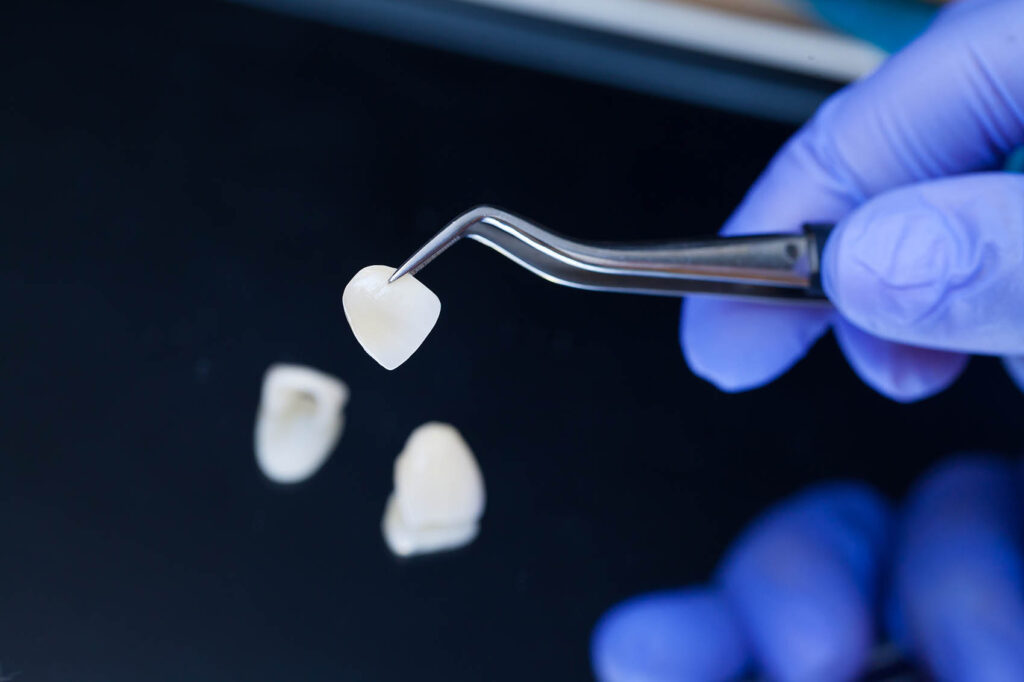
Porcelain veneers were selected for their ability to reflect light in a way that closely resembles natural enamel. They can be carefully layered to avoid a flat, overly white effect. Composite veneers may be another suitable option for some patients, particularly where a more conservative or lower-cost approach is preferred. However, composite can be more prone to staining and wear over time, so the best material depends on the individual goal, bite and maintenance preferences.
At Dental + Skin Clinic, personalised care includes making space for your questions around materials, comfort and your broader wellbeing. Where appropriate, this can include discussing lower-tox preferences and preventative options such as hydroxyapatite. Cosmetic care should feel informed and aligned with your values, not rushed or pressured.
The Trial Smile: Seeing the Change Before Committing
The most reassuring stage for this patient was the smile trial. A wax-up or mock-up can be used to preview proposed changes to tooth length, edge shape and overall balance. It gives the patient something tangible to respond to before the final porcelain is made.
In her first preview, the central teeth were slightly longer than she expected. Rather than treating that as a problem, it became a useful part of the design process. The length was softened, and the corners were rounded to create a gentler, more feminine shape that suited her face and preferences.
This is where thoughtful cosmetic dentistry differs from simply choosing a shade from a chart. A smile is dynamic. It needs to look balanced when a patient is relaxed, speaking and smiling broadly. Small refinements at the planning stage can prevent a result from feeling too symmetrical, too square or too bright.
Temporary veneers, when indicated, can also help a patient adapt to the feel of their proposed smile. For someone who has lived with worn or short teeth for years, even a beautiful change can feel unfamiliar at first. Time, communication and careful adjustments are part of a supportive process.
The Finished Result: Brighter, Softer and Still Hers
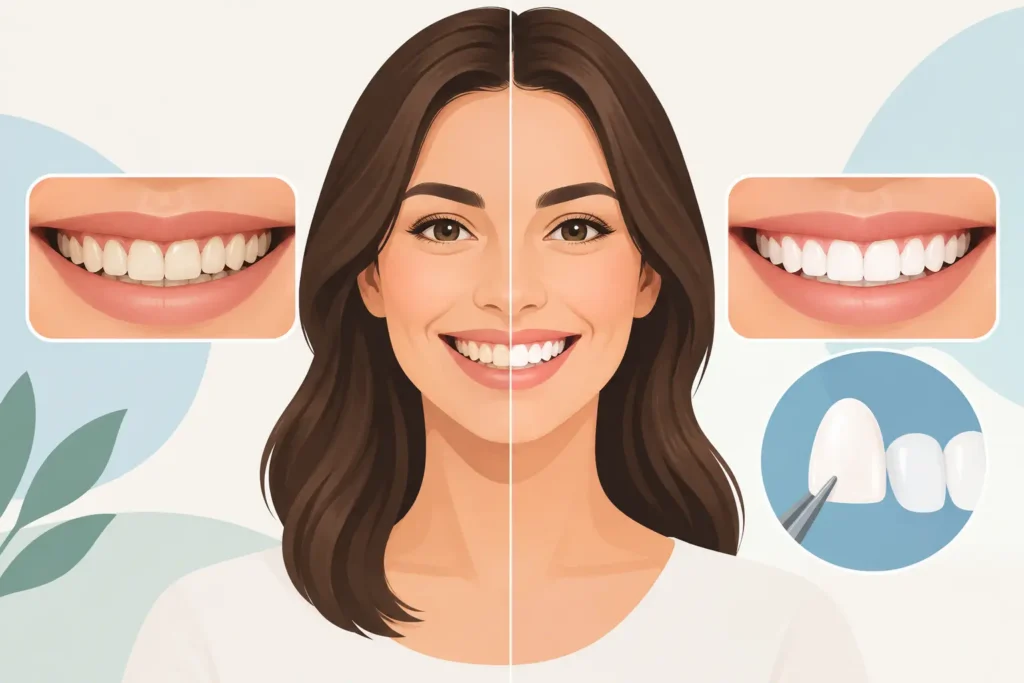
Once the final veneers were fitted, the transformation was intentionally understated. The chipped edge disappeared, the front teeth looked more even, and the shade appeared brighter without looking stark. Gentle translucency and subtle surface character helped the veneers blend with the surrounding teeth.
The most meaningful shift was not simply in the mirror. The patient felt more at ease smiling in meetings and photos, without the instinct to cover her mouth. That emotional change is often the reason people seek cosmetic dentistry in the first place. A smile makeover can be aesthetic, but confidence, comfort and self-expression are deeply personal outcomes.
It is worth being clear that veneers do not make a smile maintenance-free. They need consistent home care, regular dental reviews and sensible habits. Veneers cannot decay, but the tooth structure and gums around them still need attentive care. Avoiding biting hard objects, wearing a splint where recommended and addressing grinding early can all help protect the investment.
Is a Veneer Transformation Right for You?
Veneers may suit people with worn edges, stubborn discolouration, small gaps, minor chips or teeth that appear uneven in shape. They may not be the first step where active gum disease, untreated decay, significant bite concerns or severe grinding is present. In those situations, stabilising oral health comes first.
Sometimes whitening, bonding, orthodontics or crowns may better meet a patient’s needs. A quality consultation should leave room for those alternatives. The right treatment is the one that protects your health, respects your goals and feels sustainable for your life.
If you have been hiding your smile but want a change that still feels authentically yours, begin with a calm conversation. The most beautiful veneer transformations are not about becoming someone else. They are about bringing greater harmony to the smile you already have.